Since the brutal October 7 attack by Iran-backed Hamas, the Biden Administration has noticeably ramped up sanctions on “Ghost Fleet” tankers. As of October 28, 2024, a total of 98 tankers were sanctioned during the preceding twelve months. 

A month has passed since Israel abandoned its containment policy towards Hezbollah's attacks over the past year and went on the offense against the organization. By now, Israel has decapitated most of Hezbollah's leadership and caused significant damage to the organization's advanced and long-range weapons capabilities.

On September 25, the United States slapped more sanctions on entities and individuals connected to Iran's petroleum sector—by far the regime’s most important financial lifeline. The U.S.

What might come next for Israel — and the U.S. — in wake of Iranian attack

"After Iran rained ballistic missiles on Israel on Tuesday for the second time in sixth months, the focus now turns to the question of what comes n

Israelis take cover as missiles launched from Iran

"Israel says Iran has fired missiles at its cities. Loud explosions were heard across Israel as it apparently intercepted incoming projectiles.

As the conflict between Hezbollah and Israel has continued for close to a year, the U.N. Security Council recently renewed the mandate of the U.N. peacekeeping force in southern Lebanon (United Nations Interim Force in Lebanon or UNIFIL) for another year. The contradiction between the text approved in the U.N., and the reality on the ground could not have been more staggering, as keeping, or more likely reestablishing calm along the Israeli-Lebanese border seems far beyond the capabilities of UNIFIL. 

Over a week has passed since Hezbollah’s response to the Israeli targeted killing of Fuad Shukr, the organization’s top military commander. As the dust settles down, there are several takeaways from the event that brought Israel and Hezbollah to the closest point of an all-out war since the October 7 massacre by Hamas. 

On August 7, Israel’s National Bureau for Counter-Terror Financing (NBCTF), part of the Ministry of Defense, sanctioned 18 tankers for their involvement in the illicit trade of Iranian oil, marking Israel’s first-ever shipping sanctions.  Several of the vessels—with a total deadweight of almost 1.88 million tons—were engaged in “dark” (i.e., transponder-disabled) ship-to-ship (STS) transfers with another U.S.-sanctioned vessel off the Syrian coast. According to Israeli officials, these oil sales were likely overseen by the IRGC-Quds Force.

Hezbollah’s failed attempt to hit significant military targets in central Israel as a response to Israel’s targeted killing of Fuad Shukr, one of the organization’s top military commanders, opens a window that allows a peek into its thinking.

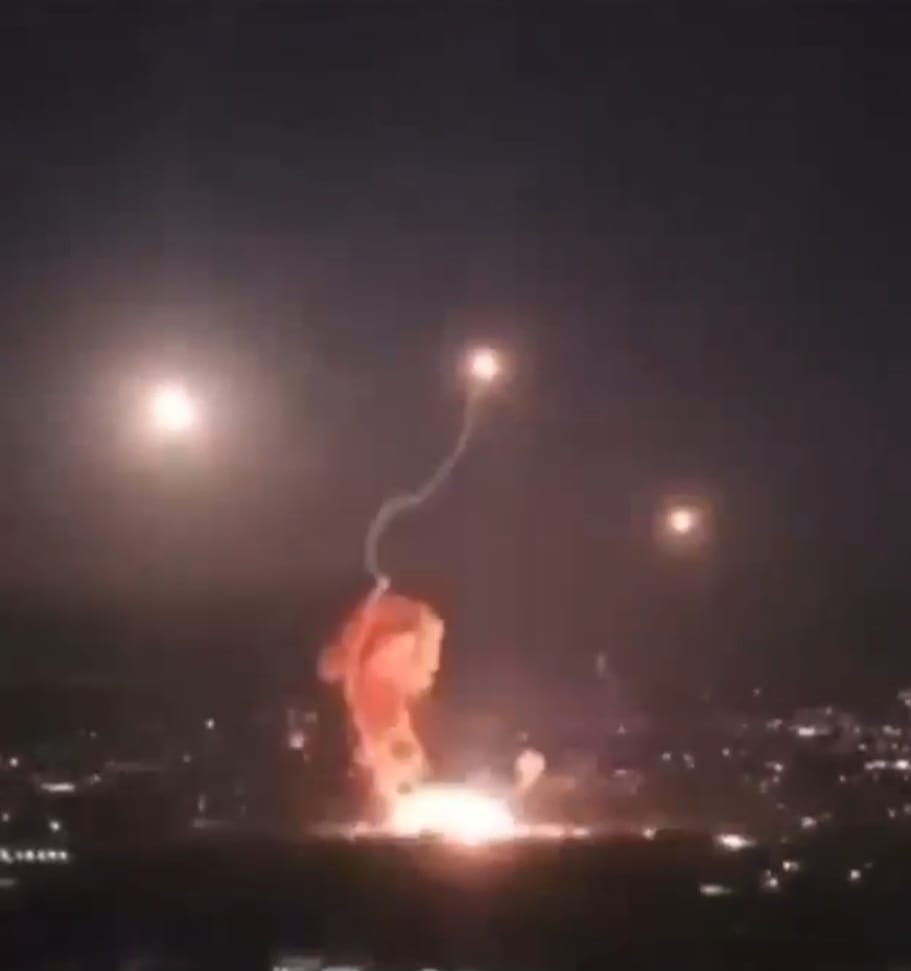
A caption from a video published on X after Israel’s strike on a Hezbollah ammunition depot last week in the Bekaa Valley

A caption from a video published on X after Israel’s strike on a Hezbollah ammunition depot last week in the Bekaa Valley