October 2026 Tanker Tracker
Introduction
Throughout October 2026, the strict enforcement of the U.S. naval blockade continued to severely restrict Iranian oil exports, maintaining intense economic pressure on the regime. Continued enforcement has resulted in the drawing down to near zero of the Iranian crude that was in the Eastern Outer Port Limits (EOPL) off Malaysia, exhausting Tehran's offshore floating storage. In the face of these developments, Tehran has intensified its regional posture, leading to the worst month for Iranian attacks on commercial shipping since the outbreak of the conflict.
Despite these escalating security threats, U.S. naval forces have successfully facilitated an increasing volume of commercial transits through the southern corridor of the Strait of Hormuz. Meanwhile, unable to breach the blockade line, tankers laden with Iranian oil and petrochemicals are building up across the Persian Gulf and Gulf of Oman.
Iran Oil Export Data
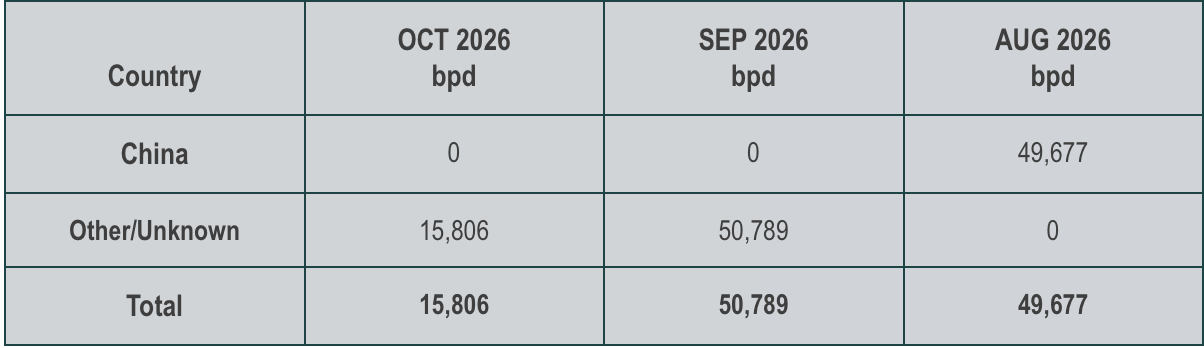
To ensure standardized month-over-month comparisons, export figures are presented in barrels per day (bpd). However, total October 2026 exports comprised a single shipment.
UANI’s export figures are calculated when tankers cross the declared U.S. blockade line, rather than at the point of loading, as there are many vessels that have been unable to sail because of U.S. enforcement.
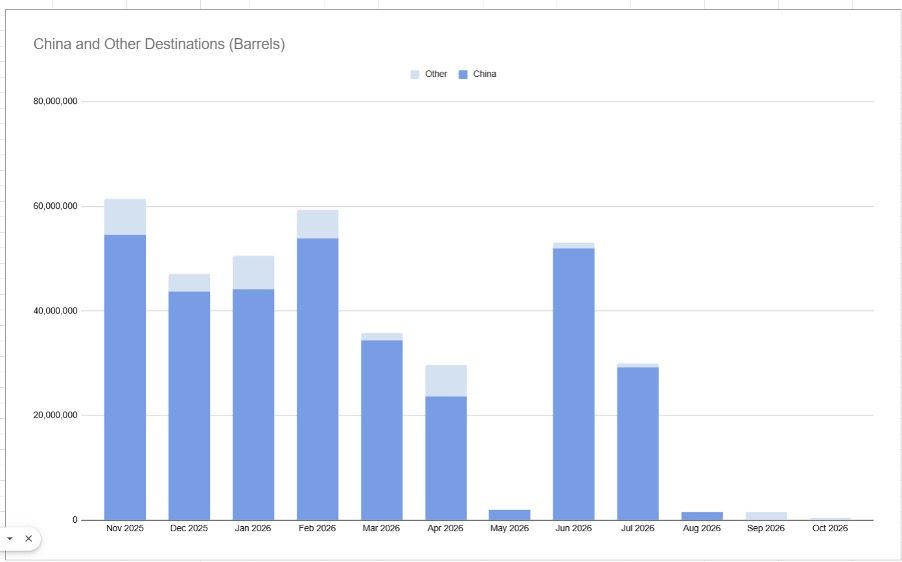
Exports remained near zero throughout the month due to the continuous and rigid enforcement of the U.S. blockade, placing extreme financial and operational pressure on the Iranian regime. Only one small tanker laden with Iranian liquefied petroleum gas (LPG) managed to depart the Gulf of Oman in the whole of October, while numerous others faced U.S. blockade enforcement and were turned around.
Iranian Attacks on Commercial Shipping
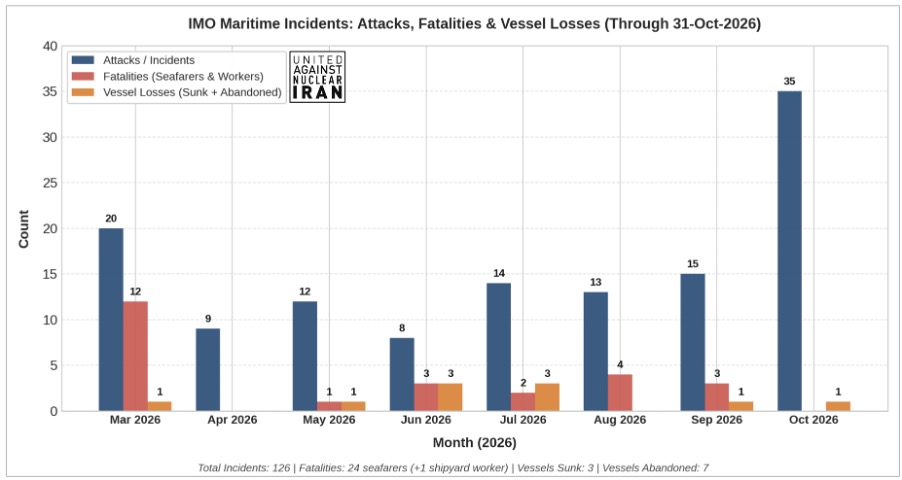
Iranian attacks on commercial shipping escalated sharply during October, marking the most perilous month for commercial maritime traffic since the outbreak of the war. The International Maritime Organization (IMO) officially recorded 35 separate attacks on commercial shipping across October.
U.S. Facilitated Transits
Despite the rise in vessel attacks, U.S.-facilitated commercial transits grew significantly over the course of October. An increasing number of merchant vessels transited the southern corridor of the Strait of Hormuz bidirectionally without broadcasting AIS location data, with U.S. naval forces directly protecting and facilitating many of these movements. In October, a total of 956 transits were recorded, averaging 30.8 transits per day. This monthly surge pushed the cumulative campaign total to 3,089 transits over 134 monitored days, maintaining an overall campaign average of 23.1 transits per day.
Iranian LPG Export Pattern
The blockade remains a resounding success, with only a small number of smaller tankers able to breach enforcement measures. Since the blockade was reinstated on July 14, approximately 11 tankers carrying Iranian LPG have managed to depart the blockade zone. Furthermore, these breachers were all carrying Iranian LPG, which introduces heightened risks should U.S. forces be required to apply physical force during interdictions.
These few blockade breachers routinely execute evasive maneuvers, loading cargo from Assaluyeh Port before loitering in the Gulf of Oman near the Sohar and Shinas anchorages off Oman. Alternatively, some tankers load cargo, conduct ship-to-ship (STS) transfers near Shinas, and allow a secondary vessel to attempt breaching the blockade line. The majority of these blockade breachers carrying Iranian LPG have ultimately arrived at receiving terminals in China.
Build-up of Laden Tankers in the Persian Gulf and Gulf of Oman
Because of the continuous blockade enforcement, a massive bottleneck of laden tankers containing Iranian energy products has formed in the Persian Gulf and Gulf of Oman. Over 50 tankers are sitting idle directly along the Iranian coastline, fully laden with Iranian crude oil, fuel oil, and petrochemicals.
In the Gulf of Oman, a large cluster of tankers has built up in Omani territorial waters near the Shinas and Sohar anchorages. On October 29, 12 small tankers were located in satellite imagery in anchorages near Shinas and Sohar, collectively laden with 4.43 million barrels of Iranian refined products. These tankers are likely loitering in these anchorages, waiting to conduct an STS transfer or for an opportunity to breach the U.S. blockade.
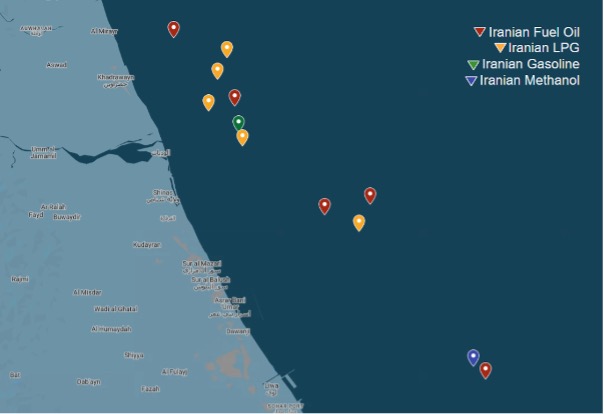
Tankers laden with Iranian refined products near Shinas and Sohar, Oman, on October 29 (Credit: UANI)
Meanwhile, on the opposite side of the blockade line, there is a similar buildup of empty, Iran-linked tankers in anchorages near Karachi, Pakistan, and Duqm, Oman, that most likely are unable to reenter the Gulf of Oman due to blockade enforcement measures.
Near Zero Oil in EOPL Anchorage
When the U.S. blockade was temporarily lifted between June 17 and July 14, more than 60 tankers loaded with Iranian oil and petrochemicals departed the Gulf of Oman, carrying over 70 million barrels of cargo. This contingent included 26 Iran-flagged tankers, all of which subsequently conducted STS transfers with secondary dark fleet vessels primarily destined for China. As a result, floating storage in the EOPL, 70 km off Malaysia, has been nearly depleted, leaving an estimated 0–5 million barrels of Iranian cargo remaining in the anchorage. Throughout October, UANI only observed one STS transfer of Iranian LPG in the anchorage.
Of the 26 Iran-flagged tankers that originally arrived at the EOPL, four empty tankers remain in the anchorage, two have not been located, and the remaining 20 ballast tankers have transited back toward anchorages off Sri Lanka.
Empty Iran-Flagged Tankers Near Sri Lanka
Prevented from returning to Iranian home ports by the U.S. blockade, 20 empty Iran-flagged tankers in ballast are currently loitering in international waters along the Sri Lankan coastline, stationed just beyond the country’s territorial waters. Between October 23 and 26, at least six of these vessels transited south toward the Galle anchorage before returning to anchorages further north along the coast. On October 24, the Sri Lankan Foreign Ministry coordinated the emergency medical evacuation of 40 Iranian seafarers from 19 commercial vessels operating in nearby international waters. The seafarers were brought ashore at Galle Harbour for medical treatment before being repatriated to Iran.
Cargo Ship Movements
About 50 Iran-flagged general cargo vessels, bulk carriers, and container ships exhibited notable activity across multiple regions during October, with many clustering in anchorages. The Malaysian EOPL has continued being a safe haven for Iranian cargo ships, with the cluster of vessels there reaching a peak of 22 vessels at one time. Most of these Iran-flagged cargo ships will likely remain in the EOPL while the blockade is in force, receiving regular logistics support from Malaysian and Singaporean service providers, despite the risk of secondary sanctions from OFAC.
Iranian cargo ships openly visited Port Klang in Malaysia, the Chinese ports of Zhuhai and Shanghai, and Indian commercial ports, including Kandla and Mumbai. Port Klang was used for two incidents of cargo transshipment when pairs of Iran-flagged ships pulled into the container terminal simultaneously and berthed near each other at the dock.
This month there has also been increased Iranian-flagged vessel activity with their AIS on at Russian ports. Two Iranian cargo vessels transited the Suez Canal, Mediterranean Sea, Dover Strait, Danish Straits, and Baltic Sea toward St Petersburg, Russia, and another sailed for Vladivostok Port, Russia. This was the first time an Iranian ship sailed for this Russian port since the start of the war.
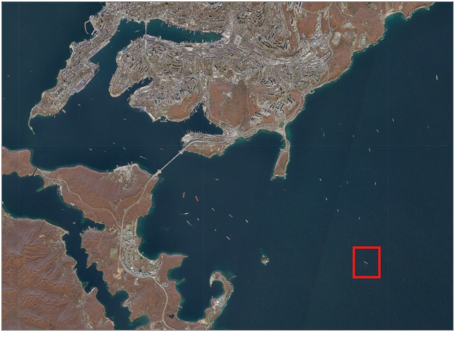
Iran-flagged cargo ship near Vladivostok on November 4 (Credit: ESA Copernicus)
Recommendations
To counter Tehran’s ongoing maritime evasion tactics and maintain the integrity of enforcement measures, maritime security authorities and coastal states should pursue the following strategic initiatives:
First, U.S. naval forces should be commended for their dual-mission success and urged to continue both their naval blockade and active facilitation of secure commercial transits through the southern corridor of the Strait of Hormuz, while the Islamic Revolutionary Guard Corps and Houthis continue to attack shipping.
Second, coastal states like Sri Lanka and Malaysia must immediately stop allowing their anchorages and contiguous waters to be utilized as loitering grounds, safe havens, or ship-to-ship transfer zones by Iranian vessels and ghost fleet tankers attempting to evade blockade measures.
Third, port authorities internationally must rigorously enforce compliance standards and refuse entry, berthing, or servicing to any OFAC-sanctioned Iranian cargo ships seeking access to commercial terminals.
Receive Iran News in Your Inbox.
Eye on Iran is a news summary from United Against Nuclear Iran (UANI), a section 501(c)(3) organization. Eye on Iran is available to subscribers on a daily basis or weekly basis.