Carl Schenck AG
Schenck Worldwide lists a sales office in Iran. (Company Website)
The Europe to the Middle East and India trade combines main load ports in Europe with destinations in the Red Sea, Persian Gulf and India. Apart from our direct ports in the Middle East area, we also serve Iran and Iraq on a transhipment basis, utilizing our own tonnage from Jebel Ali. With the extensive Höegh network, we can furthermore offer shipment out of several Mediterranean ports to the Middle East.
The main destinations in the Red sea and the Persian Gulf are served with an average frequency of two sailings per month. Exceptions are Aqaba - Jordan and Mersin - Turkey, which are served on a monthly basis. Iran and Iraq are also served monthly, but with transhipment. Destinations in India are presently called upon on a monthly basis. (Company Website)
--
Höegh Autoliners and A.P. Moller – Maersk A/S has announced their agreement for A.P. Moller – Maersk A/S to become a shareholder in Höegh Autoliners holding 37.5 per cent of the shares effective from 1 January 2008. Leif Höegh & Co Limited will retain the position as majority shareholder in Höegh Autoliners. At the same time Höegh Autoliners acquires A. P. Moller - Maersk’s fleet of 18 car carriers (including six newbuildings). (Company Website)
"Japan External Trade Organization (JETRO) has prepared a package for expansion of trade cooperation with Iran, according to the head of JETRO office in Tehran.
Takayuki Suzuki made the remarks during a meeting in Tehran with Iran Chmber’s Deputy for International Affairs Mohammad Reza Karbasi.
During the meeting, the two sides referred to a significant drop in trade relations between Iran and Japan and explored the ways for further promotion of bilateral relations.
The Japanese side said that his country is upbeat about the future of relations with Iran, and therefore JETRO is seeking to hold B2B meetings between Iranian companies and the Japanese ones in four sectors – medical equipment, cosmetics, startups, and producing cultural content." (Iran Chamber of Commerce, "JETRO eyes boosting trade with Iran," 1/26/22)
It is unclear whether the auto industry will be included in those discussions.
--
As of November 2021, Suzuki was not listed on the Texas Comptroller List of Companies Engaging in Scrutinized Business Operations in Iran
--
"Suzuki Motor reportedly licenses its products to an Iranian state-owned automobile manufacturing firm. In 2019, CalSTRS identified Suzuki Motor Corp. as potentially having ties to Iran and began the review process. The engagement has been delayed by shutdowns related to the COVID-19 pandemic. Accordingly, CalSTRS maintained an “Under Review” status in 2020."
--
In 2019 Suzuki was listed on the Texas Comptroller List of Companies Engaging in Scrutinized Business Operations in Iran.
--
In 2019, California State Teachers Retirement System listed Suzuki as a company under review for reportedly licensing its products to an Iranian state-owned manufacturing firm.
--
Japanese automaker Suzuki plans to launch and later assemble at least three new models for the Iranian market, hinting a significant shift in its sales outlook for Iran in the post-sanctions environment. (4/6/2016)
--
Suzuki is a Japanese automaker and globally recognized trademark with a capital of 120,210 million yen as of March 31, 2009. (Company Profile)
--
Suzuki is an affiliate of Volkswagen
---
"The report said that aside from Nissan and Peugeot, such car brands as Chinese Lifan, Mazda, Suzuki, and Hyundai are still being manufactured in Iran." (Trend, "Five reasons why Iran's car manufacturing suffers blow after blow," 11/27/2012)
---
Suzuki's Iranian partner Iran Khodro produced 4,393 Suzuki Grand Vitara vehicles during the Persian year ending March 19, 2012. (Best Selling Cars, "Iran March 2012: Last good showing for Peugeot," 4/18/12)
---
“SUZUKI products are now popular in 187 countries worldwide, with local assembly plants” (Company website).
---
Suzuki was one of 74 corporations identified by the New York Times as doing business with Iran as well as the United State government in the past ten years. Suzuki, which has received $1.1 million from the U.S. government, "has a production agreement with Iran Khodro Manufacturing Co., the largest automaker in Iran. Iran Khodro mass produces the Suzuki Grand Vitara, a compact SUV. Iran Khodro's Web site showcases several Suzuki models" (The New York Times, "Profiting From Iran, and the U.S.," March 12, 2010).
According to the article, as of March 12 2010, Suzuki status in Iran is listed as active.
---
Iranian automaker Iran Khodro Company (IKCO), which manufactures and sells Suzuki vehicles, has a web page for its Suzuki products. (Iranian Dealer website)
As of May 17, 2021, Iowa's Public Employee's Retirement System lists Porsche on its Iran Scrutinized Companies List.
--
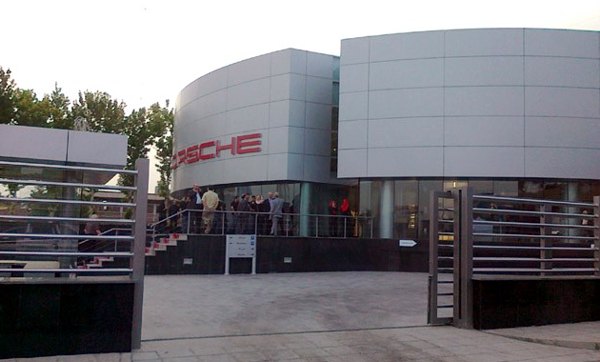
Porsche lists Moin Motors Trading Company as its location in Tehran, Iran on its company website.
--
As of August 15, 2019, the state of Iowa listed Porsche on its Iran scrutinized companies list.
--
In 2018 the U.S. state of Iowa listed Porsche Automobil Holding SE as an Iran restricted company rendering Porsche Automobil Holding SE ineligible for investment and/or state contracting.
--
Porsche AG is a German automobile manufacturer of luxury vehicles, and a subsidiary of larger conglomerate, Porsche Automobile Holding SE, along with Volkswagen AG. (Company Website).
--
"The Trade Promotion Organization of Iran has announced the list of cars which are allowed to be imported in the current Iranian year, but renowned brands such as Porsche, Benz, BMW, Maserati, and Nissan are not in the list, ISNA news agency reported." (Azer News, "Iran bans imports of renowned car brands," 5/27/2013)
--
"Wealthy Iranians are fueling an unprecedented luxury car boom despite sanctions hurting their economy, paying up to $360,000 for high-end autos, according to showroom employees and reports Sunday. 'Buyers are paying upfront for these cars, which generally cost two to three times more than abroad,' one car salesman in Tehran told AFP on condition of anonymity. A newspaper citing official customs data, Hafte-Sobh, reported that 'some 563 different Porsche models were sold in the last Iranian year (to March 2012),' worth a total $50 million before a hefty 100-percent import tax... Maserati, the growling musclebrand owned by Italy's Fiat, is also looking to get a slice of the action by opening its own Tehran showroom within weeks, reports say. The ostentatious splurge by Iran's elite starkly contrasts with the straits experienced by ordinary Iranians." (Agence France-Press, "Wealthy Iranians spur lucury car boom despite sanctions," 4/23/12)
--
"Porsche has become the latest international automaker to pull its business out of Iran in an apparent response to an effort by two U.S.-based advocacy groups to step up pressure on the Tehran regime, FoxNews.com has learned. United Against a Nuclear Iran and Iran Watch List launched their campaign in 2010 after they discovered the Iranian auto industry, the 13th-largest in the world, is dominated by members of the Iranian regime and the Islamic Revolutionary Guard Corps. 'We have to send a message to that regime that no longer can it be business as usual until they renounce their nuclear weapons program and stop sponsoring terrorism around the world,' said former U.S. Ambassador to the United Nations Mark Wallace, who heads United Against a Nuclear Iran. Wallace says the auto sector feeds the Iranian regime not only as 'a massive source of revenue,' but also as a means of accessing advanced foreign technologies and products." (FoxNews, "Bowing to pressure, Porsche joins Hyundai in ending business with Iran," 4/16/12)
---

The Porsche dealership center in Tehran (Source: Gooya News)
Subaru's parent company is Fuji Heavy Industries.
--
"As a result, a variety of automotive brands are being presently imported into Iran including Toyota, BMW, Mercedes Benz (these three being the expensive and/or luxury brands), Rover, Ssangyong, Audi, Subaru, Rio LS, Hyundai (Sonata and Azar1), Citroen, Daimler-Chrysler, Proton, Countach, Volkswagen, Renault Leon, Altea..." (Business Wire, "Iran Ranked as the 16th Biggest Automaker of the World in the Year 2006," 6/10/07)
--
"Another Japanese auto giant is going to situate itself in Iran's import-thirsty auto market this year. The sales of about 2500 Legacy sedans by Subaru are the prelude to this venture on the agenda, the Persian service of ISNA reported on Monday. The company, the fifth recent importer after Toyota, MB, BMW and Audi, will target the market with 2000cc version of Legacy to rival Toyota Camry in the coming May. Two other SUV-style models, Impreza and Forester, are expected to follow suite in the near future." (Payvand News. "Subaru to target Iran with Legacy model," 4/11/06)
The representative of Japan's Isuzu Motors announced the expansion of its activities in Iran. The representative of Isuzu in the unveiling ceremony of Truck FVZ 26 tons said, “Iranian market is important for Isuzu Motors and because of this, the company wants to expand its activities in Iran”. (February 2018)
--
Japan's iconic ISUZU brand has launched its latest vehicle in the Iranian market costing 1.18 billion rials ($33,700). (Financial Tribune, "ISUZU Pickup Launched," 5/29/2016).
--
In February 2016, Isuzu said that it was “considering expanding business in Iran following the recent removal of the Japanese government’s economic sanctions on Tehran.” (Bernama, “Japan’s Isuzu mulling biz expansion in Iran,” 2/10/2016).
--
Isuzu is listed as a participating company at the 14th International Exhibition of Transportation & Urban Services & Related Industries which takes place October 27-30th, 2016 in Tehran Iran. (Participating International Companies)
--
"Isuzu uses the Bahman Group as its distributor in Iran, according to Isuzu's Web site. The Sepah Cooperative Foundation, a large investment fund closely linked to the Iranian Revolutionary Guard Corps (IRGC), owns a 45 percent share of the Bahman Group, according to Iranian newspaper reports. (Among the links between the Sepah Cooperative Foundation and the IRGC: the general manager of the the Sepah Cooperative until this fall was IRGC commander Ahmad Vahid-Dastjerdi. Another former notable head of the Sepah Cooperative Foundation was Mohsen Rafiqdoost, who helped found the IRGC. The Sepah Cooperative Foundation's stake in the Bahman Group has also been reported by Rand Corporation, in a 2009 report prepared for the Office of the Secretary of Defense, as well as the think tanks the Washington Institute, and the Council on Foreign Relations reports.) Isuzu spokesman Kouichi Itou said in a statement that the company was not aware of those links and believed that a 'Retirement Insurance Organization' was a 45 percent shareholder in Bahman."
From 2000 through March 2010, Isuzu has been the recipient of $1.9 million in U.S. federal funds. (The New York Times, "Profiting from Iran, and the U.S.", 3/6/10)
IVECO S.p.A. (“IVECO”) was listed as a participant at the 16th International Exhibition of Transportation Urban Services & Related Industries (“ITUF”), which took place at the Tehran International Permanent Fairground from January 2-5, 2019. (ITUF 2019, “Exhibition Profile”).
--
"Iranian commercial vehicle manufacturer, Zamyad, and Turin-based IVECO have agreed to expand cooperation. Under a recent agreement, the sides have decided to manufacture and offer new and highly-qualified products of the European manufacturer in Iran. Therefore IVECO will increase the volume of its exports of CKD (Completely Knocked Down) car parts to Iran, Zamyad announced." (March 2018)
--
"At the Mashhad International Auto Exhibition in August 2016, Zamyad Khodro, a subsidiary of Iranian automaker SAIPA, announced its plans to expand its collaboration with IVECO, a subsidiary of CNH Industrial whose trucks have previously been documented transporting Iranian missiles and being used to stage public executions. Zamyad Khodro is reportedly the official representative of IVECO in Iran and this year will be introducing IVECO’s heavy-duty truck, the Starlis 500." (Financial Tribune, “Mashhad Hosts Int’l Auto Expo,” 8/11/2016).
--
Iveco is listed as a participating company at the 14th International Exhibition of Transportation & Urban Services & Related Industries which takes place October 27-30th, 2016 in Tehran Iran. (Participating International Companies)
--
"Fiat Industrial and CNH issued statements with the same wording. Fiat exports cars to Iran while Fiat Industrial exports buses and trucks under its Iveco brand... 'We welcome this announcement and are pleased that Fiat's subsidiary Iveco will no longer sell trucks to the Iranian regime, which has used them to transport ballistic missiles and perform gruesome public executions,' the group said in a written statement." (Dow Jones, "Fiat Ban On Sales To Iran Seen As Victory In Sanctions Campaign," 5/25/2012)
--
"Another example is Fiat's subsidiary Iveco. The truck maker has since the early 1990s delivered thousands of vehicles to Iran and boasts on its Web site about its joint-venture assembly line in Iran. The problem is that some of these trucks, as shown on the nearby photograph, can also be used to transport Iranian missiles.
Iranian Opposition members say these trucks also serve another sinister purpose: the public hangings of homosexuals and dissidents. I have seen a photograph showing these executions on Iveco trucks at an October 2007 exhibition in Rome organized by Italy's largest organization against the death penalty, 'Nessuno tocchi Caino.'
Maurizio Pignata, director of Iveco's press office, assured me Wednesday that their 'vehicles, like the ones in the photograph with missiles in Tehran, are always sold for civilian purposes.' He added however that the company 'can't know the ulterior exploit of our vehicles. The photograph of the truck with Iranian rockets shows normal Iveco vehicles converted for different goals. In China they used our vehicles for public executions of prisoners. So we can't know if our trucks are used in Iran for military or repressive purposes.'" (The Wall Street Journal, "The Rome-Tehran Axis," 1/14/10)

Iveco trucks sold for "civilian purposes." (Courtesy of Getty)
[email protected] ( Vice President, Government & Public Affairs); [email protected] ( U.S. Press Fleet); [email protected] (Director, Government & Public Affairs)
A week after it was announced that French carmaker Peugeot-Citroen had left the Iranian market, Japan’s Mazda and South Korean Hyundai have also suspended contracts with Iran, according to a member of the parliamentary Industries and Mines Commission.
In an interview with the parliament-affiliated website, Valiyollah Maleki said June 12, “Mazda and Hyundai’s interests in the U.S. market are much more than in Iran, and they will not sacrifice their profit for the sake of Iran.” (June 13, 2018).
--
Mazda is listed as a participating company at the 14th International Exhibition of Transportation & Urban Services & Related Industries which takes place October 27-30th, 2016 in Tehran Iran. (Participating International Companies)
--
Mazda lists the Bahman Group, based in Tehran, Iran, on its Middle East & North Africa distributor list. (Company Website)
--
"UANI (United Against Nuclear Iran) group calls on Japanese car manufacturer Mazda and French Peugeot to end their business in Iran, UANI (United Against Nuclear Iran U.S. group) Communications Director Nathan Carleton told Trend. While a lot of car manufacturing companies have left Iran due to sanctions imposed on the Islamic Republic, according to Carleton despite the threat of sanctions, there are still some world-known car brands that do their business in Iran. Among them are Mazda and Peugeot. 'Mazda's ongoing business in Iran is egregious given that its vehicles are produced in Iran in partnership with the Bahman Group, a manufacturing conglomerate that is 45.5 percent owned by the Islamic Revolutionary Guard Corps (IRGC),' Carleton said. He went on to note that if Mazda does not end its Iran business, it should be sanctioned under presidential Executive Order 13645, which authorizes sanctions on entities 'knowingly engaged in a significant transaction for the sale, supply, or transfer to Iran of significant goods or services used in connection with the automotive sector of Iran.'" (Trend, "UANI calls on Mazda, Peugeot to end their business in Iran," 9/16/13)
--
"The report said that aside from Nissan and Peugeot, such car brands as Chinese Lifan, Mazda, Suzuki, and Hyundai are still being manufactured in Iran." (Trend, "Five reasons why Iran's car manufacturing suffers blow after blow," 11/27/2012)
--
"Mazda has been operating in Iran at least since 1972. The Bahman Group assembles Mazda cars for the company. The Sepah Cooperative Foundation, a large investment fund closely linked to the Iranian Revolutionary Guard Corps (IRGC), owns a 45 percent share of the Bahman Group, according to Iranian newspaper reports. (Among the links between the Sepah Cooperative Foundation and the IRGC: the general manager of the the Sepah Cooperative until this fall was IRGC commander Ahmad Vahid-Dastjerdi. Another notable head of the Sepah Cooperative Foundation was Mohsen Rafiqdoost, who helped found the IRGC. The Sepah Cooperative Foundation's stake in the Bahman Group has also been reported by Rand Corporation, in a 2009 report prepared for the Office of the Secretary of Defense, as well as the think tanks the Washington Institute, and the Council on Foreign Relations reports.) Mazda spokesman spokesman Chris Keeffe said that his company's business in Iran complies with all Japanese and international laws. Mr. Keefe said he was not aware of the reports linking the Iranian Revolutionary Gaurd to the Bahman Group and threfore could not comment. Contracts for Mazda and Ford Motor Company, which owned one-third of Mazda until 2008 and remains one of its largest shareholders, include selling trucks and cars to the United States military." From 2000-2009, the company was the recipient of $2.4 billion US federal funds. Their investments in Iran are currently active. (The New York Times, "Profiting from Iran, and the US," 3/6/2010)
--
“Khalaji, of the Washington Institute, lists the Bahman Group, which manufactures cars for Mazda, among [Iran Revolutionary] guard-owned companies.” (Council on Foreign Relations, “Iran’s Revolutionary Guard,” 10/3/07)
--
“Japan's Mazda, one-third-owned by Ford, has a joint venture with Iran's private Bahman group to make a version of the Mazda 323, and Chrysler parent DaimlerChrysler has licensed assembly of an E-class Mercedes-Benz.” (Fortune, “Made in Iran,” 9/12/06)
[email protected] (PR Senior Manager); [email protected] (PR Manager); [email protected] (Corporate Vice President of Global Communications and Investor Relations); [email protected] (Vice President Corporate Communications)
"The CEO of SAIPA automaker group announced plans to resume the production of Nissan products in Iran. “Recently, we held negotiations with the officials of Japanese automobile manufacturer Nissan.” the CEO of SAIPA automaker group, Mohsen Qasem Jahroudi said. “According to the negotiations, a triple platform from Nissan will be introduced into the SAIPA automaker group,” he added. Nissan products were produced in Iran until a few years ago. One of the most famous of the products was Nissan Maxima whose production was stopped six years ago. Mr. Jahroudi stressed that Nissan will soon resume its activities in Iran." (March 14, 2018)
--
"Jahan Novin Trading Company (JNA Nissan), the authorized representative of Japan’s Nissan in Iran, unveiled its latest Nissan X-Trail in Tehran on January 5. According to the local automotive website Asbe Bokhar, the trading company is a joint venture set up by an Omani company, Suhail Bahwan Group and the Iran’s Ariya Group. Suhail Bahwan Group has been representing the Japanese auto manufacturer since 2004 in the region and is one of the majority shareholders of Nissan. By forging a deal with the Omani company, JNA Group was able to meet government requirements on importing consumer goods with the parent company’s authorization." (January 8, 2017).
--
"Iranian car manufacturing company Saipa is in talks with France's PSA Peugeot Citroen and Renault, Germany's Mercedes-Benz, and Sweden's Volvo to finalize deals on joint production of cars in Iran, Saipa officials announced on Tuesday. Saipa CEO Saeid Madani announced that the company is in negotiations with PSA Peugeot Citroen to sign a deal, but at the same time noted that any deal would depend on the ongoing talks between Tehran and world powers over the country's peaceful nuclear energy program. He made the remarks on the sidelines of a ceremony held here in Tehran to unveil the production line of a new Volvo truck in Saipa Diesel factory… Japanese company Nissan has also declared its willingness to cooperate with Saipa and expand collabortions with the Iranian firm, he added." (Tasnim, Iran's Saipa Negotiating with European Automakers, 5/12/15)
--
"The Trade Promotion Organization of Iran has announced the list of cars which are allowed to be imported in the current Iranian year, but renowned brands such as Porsche, Benz, BMW, Maserati, and Nissan are not in the list, ISNA news agency reported." (AzerNews, "Iran bans imports of renowned car brands," 5/27/2013)
--
"Such car brands as Nissan, Peugeot (sedan and hatchback), Toyota for several reasons, stopped their car manufacturing in Iran several months ago. Because French Peugeot Company and Iran Khodro stopped the co-operation, the manufacturing of Peugeot 206 in Iran has stopped. As for Nissan's Maxima brand, the giant car manufacturer from Japan halted its business in Iran after 11 years. However, in both cases with Nissan and Peugeot, several models are still being sold in Iran, such as Peugeot's 405 model, and Nissan's Teana. The report said that aside from Nissan and Peugeot, such car brands as Chinese Lifan, Mazda, Suzuki, and Hyundai are still being manufactured in Iran." (Trend, "Five reasons why Iran's car manufacturing suffers blow after blow," 11/27/2012)
--
"A US activist group on Wednesday urged French automaker Renault and its Japanese partner Nissan to pull their business out of Iran because of its suspected program to develop nuclear weapons. In an open letter to Carlos Ghosn, the Renault-Nissan Alliance's chief executive officer, the advocacy group United Against Nuclear Iran (UANI) said, 'Renault's business dealings in Iran directly support the Iranian regime's ability to develop its illegal nuclear weapons program, support its terrorist proxies and puruse a brutal campaign of repression against the Iranian people.'... The UANI letter said it was 'disturbing' that Nissan was getting a contract valued at about $1 billion to manufacture a new fleet of New York City taxis while the automaker continues to do business in Iran. 'New York taxpayer dollars should not benefit a corporation, like Nissan, that partners with a regime that is the world's number one state sponsor of terror and has formed an alliance with al-Qaeda,' UANI said." (AFP, "US activists pressure Renault-Nissan to leave Iran," 4/5/2012)
--
"Nissan has a longtime relationship with the Iranian car company Pars Khodro Co., which has been producing Nissan cars and trucks for the Japanese company for sale in Iran since at least 1987. Nissan also does business with the United States government, selling the Department of Defense cars and trucks." From 2000-2009, the company was the recipient of $15.7 million US federal funds. Their investments in Iran are currently active. (The New York Times, "Profiting from Iran, and the US," 3/6/2010)
--
Nissan has a production facility in Tehran with Pars Khodro, a major Iranian automobile manufacturer. In 2008, Pars Khodro manufactured the Nissan Pickup, Maxima and Paladin in this facility. In 2007, Pars Khodro produced 7,967 Nissan vehicles. (Nissan, “Profile 2008”)
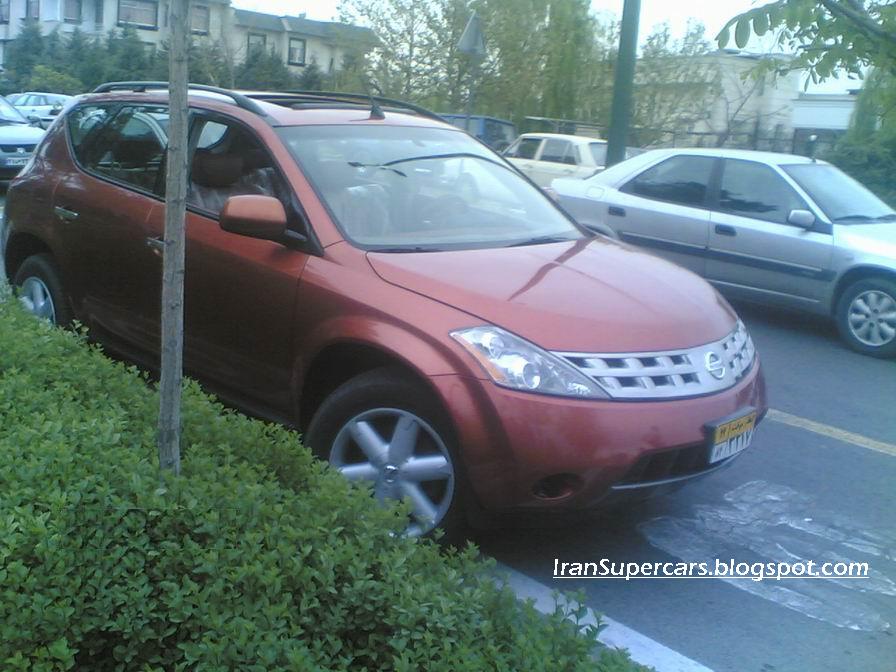
Pars Khodro lists on its website that it sells and/or manufactures the Nissan Murano, Maxima, Pickup, Roniz [Paladin] and Teana car models. (Company Website)

Nissan Murano in Iran (Courtesy of IranSupercars)
"A recent announcement by Iranian car company SAIPA that Kia Motor has halted its operations in Iran brought the role of foreign firms in Iran’s auto sector in sharp focus. On August 3, SAIPA announced that Kia Motors terminated its Iran operations due to US sanctions. This is while informed sources previously said that the South Korean company had suspended its operations in the country months ago. SAIPA has reported on its website, “Just like French car companies, Peugeot and Citroen, and the Chinese automaker Brilliance, Kia has also cut its ties with SAIPA.”" (Financial Tribune, "Carmakers Taken to Task for Iran Exit," 8/12/2019).
--
"SAIPA auto company is to sign two joint production deals with East Asian automotive giants Nissan and Kia. The two companies previously had a strong presence in Iran. Kia currently sends complete knock down (CKD) kits of the older version Kia Cerato as part of a assembly deal with SAIPA." (July 2017)
--
Kia Motors resumed its knockdown business with Saipa, Iran's No.2 car maker, earlier this year. 1,200 Fortes (local brand: Serato) were locally produced during the first quarter. Kia has also sold 800 finished cars to the market, including some of the K3 model. The brand's representative sedan Pride had once been one of the most commonly seen cars on Iran's roads along with Peugeot, before the sanctions. (The Dong-A ILBO, “Hyundai to ‘knockdown export’ Mighty to Iran,” 5/18/2016).
--
There is currently a Facebook page entitled “Kia Motors Iran,” which links to the Iranian dealership Atlaskhodro and whose website also advertises for Kia. (Facebook, “Kia Iran Motors,”; Atlaskhodro Website, “Homepage”).
--
Kia states that it “has a long history of building locally to meet the specific needs of local customers, with assembly operations using ‘car kits’ (supplied from Korea), in … Iran… ” (Kia Website, “KIA MOTORS CORPORATION”).
--
Kia is part of the Hyundai Kia Automotive Group.
--
"Managing Director of SAIPA auto manufacturing company said with regard to the existence of proper infrastructures in the country the government has put support for foreign investment on its agenda. Saeed Madani, speaking at the second International Conference on Auto Industry, further remarked that SAIPA auto manufacturing group is capable of manufacturing 945 thousand vehicles in the country plus 46 thousand in foreign sites such as Syria, Iraq, Venezuela and Sudan... He said negotiations have been held with Volvo and expressed hope that manufacture of this brand will commence jointly, adding that at present SAIPA has joint cooperation with Renault, Nissan, Kia..." (IRNA, "Support for Foreign Investment in Auto Manufacturing Industry," 12/1/14)
--
"[T]he auto sanctions were lifted earlier this year after an interim nuclear agreement was reached between Iran and world powers and a final accord is still on the horizon, raising the prospect of better times for the industry. That will draw international suitors to Tehran on Monday for the second consecutive Iran Auto Show. Mercedes Benz, Volkswagen, Renault, Peugeot, Kia and Toyota have confirmed [they will attend]." (Agence France-Presse, "Foreign automakers find Iranian market has gone local," 11/30/14)
--
"Iran totally imported 51,967 cars in the first half of the current Iranian calendar year (March 21 - September 22). Hyundai with 24,991 cars was the main exporter of cars to Iran in the mentioned period, Peykhabar News Website reported on Nov. 15. Kia Motors with 9,339 cars..." (Trend, "Korea’s Hyundai gains lion share of Iran’s car imports market," 11/16/14)
--
"Last week, Qorbani announced that Benz, Volkswagen, Volvo, Fiat, Rover, Skoda, Renault, Peugeot, Kia and Toyota would take part in the Iranian auto expo, adding that the US car-manufacturers would also join the event. 'In case of desirable conditions, General Motors and Ford companies will also attend the event.' He continued that some leading car parts makers, including Siemens, FORD Mendo, Busch, FRW and ACI would attend the gathering. The event will start work on December 10." (Fars News, "55 Giant Int'l Carmakers, Part-Makers to Participate in Iranian Auto Expo," 11/2/14)
--
“For example, Iranian auto manufacturer Pars Khodro produced 240,923 Kia Pride cars for one year between March 2011 and February 2012. Given Hyundai Wia supplies 95 percent of its parts to Hyundai and Kia, the new sanctions will hurt the company's bottom line acutely.” (The Korea Economic Daily, “Hyundai Wia in Danger of Losing Big in Iran,” 6/27/13)
--
"According to the report, 17 car brands have been permitted to be imported in the current year. The cars include Hyundai (2 models), ABT, Alfa Romeo (2 models), MG, SsangYong, Toyota, Renault (6 models), and Kia (2 models). Previously, 25 car brands were included in the list, such as South Korean brands (Kia and Hyundai), Chinese brands (SAIC motors), Italian brands (Fiat, Alpha Romeo), Japanese brands (Honda, Mitsubishi), German brands (ABT), and Swedish brands (Volvo)." (Azer News, "Iran bans imports of renowned car brands," 5/27/2013)
--
"South Korea's Kia Motors, whose Pride model is ubiquitous on Iranian roads, said Tuesday it had suspended exports to the Islamic state partly in response to Seoul's nuclear-related sanctions. 'South Korean government sanctions... were part of the decision,' Kia spokesman Michael Choo told AFP, declining to comment further. Kia's Pride, a small hatchback, accounts for 30-40 percent of all vehicles on Iran's roads, according to the company. The firm last year exported 4,210 complete vehicles to Iran and 17,040 cars in kit form for local assembly. Kia suspended all exports to Iran last month, including completed vehicles, kits and spare parts -- before South Korea's government announced its detailed measures but after it announced its intention to impose sanctions . . . Kia, with its larger partner Hyundai Motor, forms the world's fifth largest automaking group." (Google News, "South Korea's Kia halts exports to Iran," 9/13/10)
--
"Kia has a production agreement with Saipa, Iran's second-biggest car producer. Saipa currently manufactures the Kia Rio under license. Kia entered the Iranian car market in 1993 when it won a contract to set up an assembly plant." From 2000-2009, the company was the recipient of $706,745 US federal funds. Their business in Iran is currently active. (The New York Times, "Profiting from Iran, and the US," 3/6/2010)
--
"Saipa 141 with a 1323 cc three cylinders engine has been described as a popular car because of its low fuel consumption, good customer service as well as cheap auto parts. Saipa 141 is a car made by Iranian carmaker Saipa using the platform of the Kia Pride Car." (Press TV, "Saipa launches production line in Syria," 7/3/09)
--
"Foreign car makers seeking volume are gambling their US businesses - and getting away with it by licensing models in Iran, the country's 70 million population too big to ignore as markets elsewhere mature. Kia of Korea is producing a version of the Pride with Saipa, Peugeot a take on its popular 405 model with both Saipa and Iran Khodro, and Renault has a $300 million investment with Saipa to produce the Logan and the Megane." (Sydney Morning Herald, "Iran’s car industry stuck in 1970s gear," 10/16/06)
Eye on Iran is a news summary from United Against Nuclear Iran (UANI), a section 501(c)(3) organization. Eye on Iran is available to subscribers on a daily basis or weekly basis.