Iran Shipping Update – November 13, 2026
The maritime security environment across the region remains highly volatile. Iranian attacks on commercial shipping in the Strait of Hormuz continue to disrupt maritime traffic, while Iran-backed Houthi threats and attacks around the Bab el-Mandeb pose a renewed risk to shipping through the Red Sea. Meanwhile, the U.S. maritime blockade on Iranian ports continues to severely constrain the regime’s oil exports.
For UANI’s recommendations for U.S. sanctions on Iran following “Economic D-Day,” read here.
Status of the Strait of Hormuz
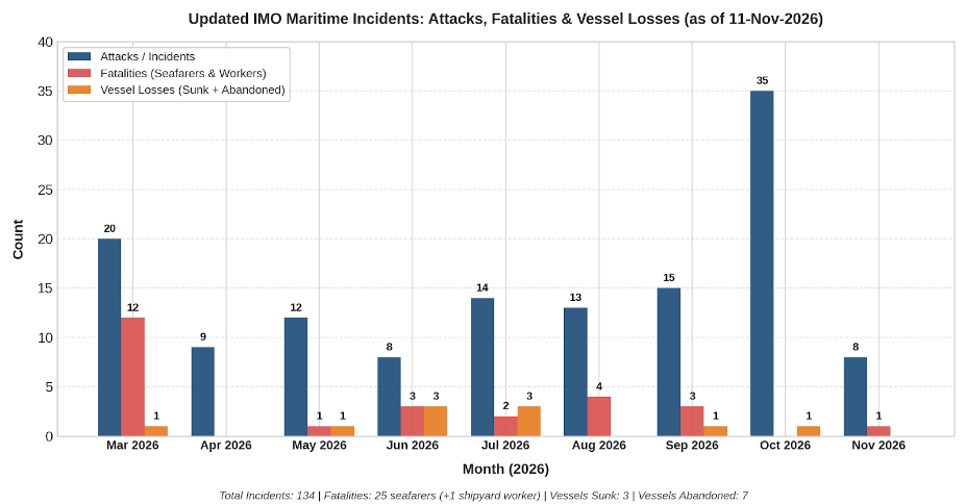
Since the start of the Iran War, the International Maritime Organisation (IMO) has confirmed 136 maritime incidents involving commercial vessels across the Persian Gulf, Strait of Hormuz, and Gulf of Oman. According to the IMO, these incidents have resulted in 25 seafarer deaths. UK Maritime Trade Operations (UKMTO) has recorded more attacks that have yet to be verified by the IMO.
In the past months, an increasing number of vessels have transited the southern corridor of the Strait of Hormuz bidirectionally without broadcasting AIS location data, with many of these movements facilitated by U.S. forces. On November 13, satellite imagery shows several vessels transiting the southern corridor of the Strait of Hormuz, as well as the aftermath of a strike on the tanker DOMINICA PROSPERITY (IMO 939549). This tanker was struck by an unknown projectile 14 nm northwest of Ras al Khaymah, UAE, on November 11, resulting in a fire on board.
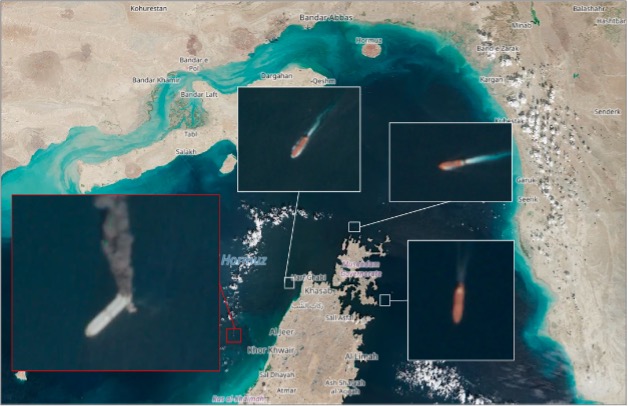
Tanker transits and the aftermath of an attack in the Strait of Hormuz on November 13
(Credit: ESA Copernicus)
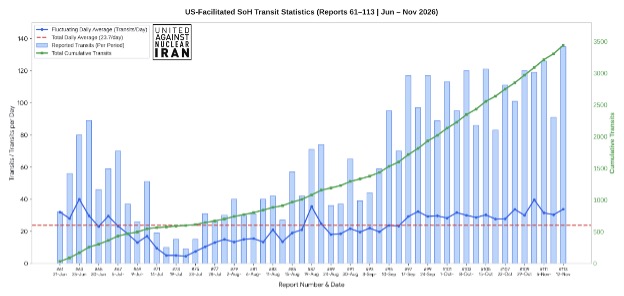
U.S.-facilitated transits through the Strait of Hormuz climbed to an average of 33.8 vessels per day, with a record 135 transits recorded during the latest 96-hour period (November 8–11). This lifted the month-to-date November total to 352 transits across 11 days at 32.0 per day, and raised the cumulative campaign total to 3,441 transits at an overall average of 23.7 per day across 145 monitored days.
Iranian Oil-Laden Tankers Departing the Gulf of Oman
Tankers laden with Iranian oil and petrochemicals are currently clustering in anchorages along the Iranian coastline due to the reinstatement of the blockade. Since the blockade resumed, approximately 12 small tankers carrying Iranian LPG have successfully passed the blockade line. However, UANI has not tracked any tanker laden with Iranian crude oil that has successfully departed the Gulf of Oman and avoided enforcement actions by U.S. forces since July 12, before the blockade was reinstated.
Iranian Oil-Laden Tankers
UANI has identified at least 57 tankers laden with Iranian oil—primarily crude, but also other petroleum products and LPG—currently operating along the Iranian coastline.
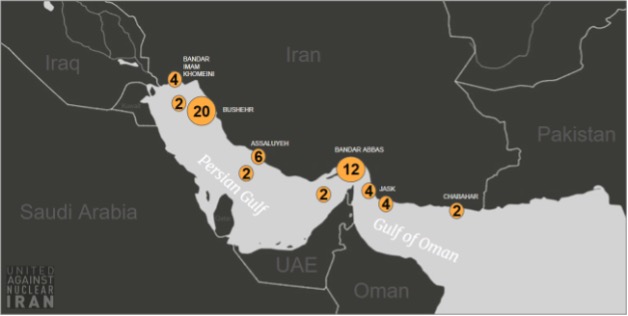
Positions of tankers laden with Iranian oil on November 13 (Credit: UANI)
Number of Iranian Loadings
Since the U.S. reinstated the blockade on July 14, UANI has tracked at least 58 Iranian oil and petrochemical loadings, only eight of which originated from Kharg Island, Iran.
Iran-Linked Tankers Globally
UANI has also monitored Iran-flagged tankers operating beyond the Persian Gulf, particularly in the waters near Malaysia. At least 19 tankers listed on UANI's Ghost Armada were anchored or loitering north of the EOPL anchorage with their AIS signals active. These tankers most likely departed the anchorage due to the purported recent enforcement actions of the Malaysian maritime authorities. Meanwhile, about 23 tankers listed on UANI’s Ghost Armada remain loitering in the EOPL anchorage, demonstrating that Ghost Fleet tankers continue to operate with impunity across Southeast Asia's sea lanes.
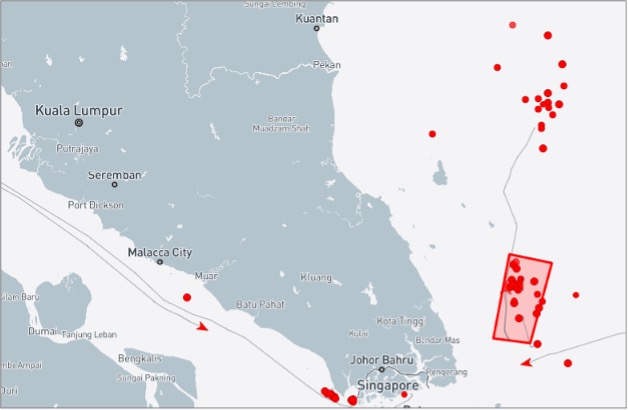
Ghost Armada tankers near Malaysia on November 13 (Credit: Marine Traffic)
Iran-Flagged Cargo Ships Globally
Despite ongoing pressure of OFAC sanctions and new constraints of the blockade, approximately 50 Iranian-flagged cargo ships continue to operate openly across sea lanes, ports, and anchorages throughout the Indo-Pacific region, Mediterranean, Atlantic Ocean, and Baltic Sea.
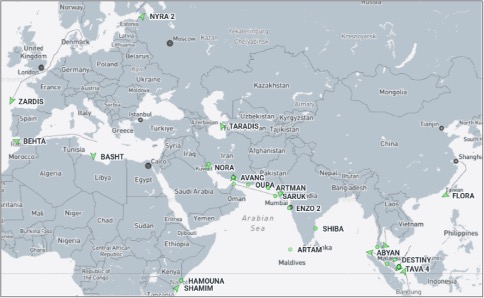
Iran-flagged cargo vessels across the region on November 13 (Credit: Marine Traffic)
Near St. Petersburg, Russia, the container ship NYRA 2 (IMO 9241487) has remained at Bronka Port since November 12, following its transit from Mumbai, India.
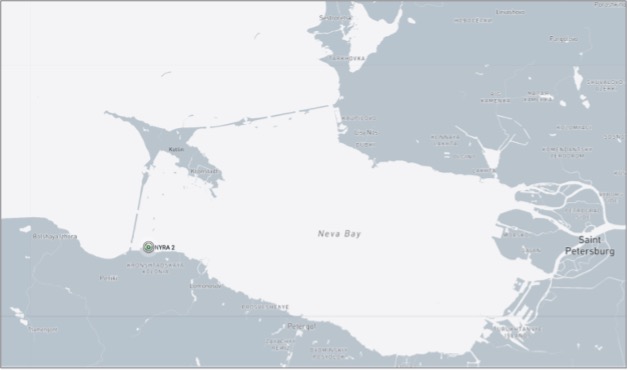
Nava Bay and St Petersburg on November 13 (Credit: Marine Traffic)
In the Atlantic, the container ships ZARDIS (IMO 9349679) and BEHTA (IMO 9349590) approached each other off the coast of Portugal. ZARDIS departed Bronka Port on November 7 and is now approaching the Gibraltar Strait on its return voyage toward Port Said and the Suez Canal. Meanwhile, BEHTA is sailing toward the Dover Striat on its way to Bronka Port in the Russian Baltic. It is estimated to transit the Dover Strait on November 15 and arrive at Bronka Port on November 19.
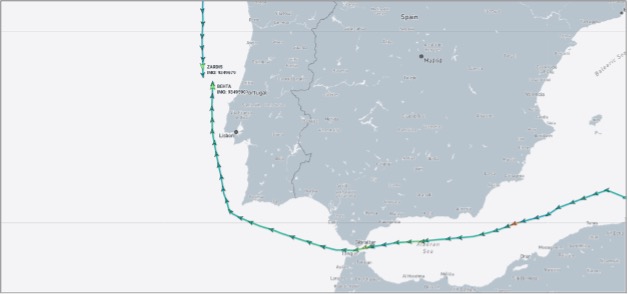
Iran-flagged cargo ships in the Atlantic Ocean on November 13 (Credit: Marine Traffic)
Near the maritime boundary of Turkish and Greek waters, the general cargo ship ALVAN (IMO 9165798) remained anchored after drifting and loitering in the vicinity of Tenedos Island, near the entrance to the Turkish Straits, since October 23. The vessel remains likely to transit the Turkish Straits toward a Russian port, though its departure is likely delayed awaiting more favorable security conditions amid ongoing risk of drone strikes in the Black Sea.
At Misrata, Libya, the container ship BASHT (IMO 9346536) pulled into Misrata container terminal for cargo operations.
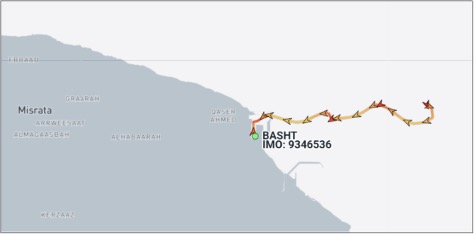
Iran-flagged cargo ship at Misrata on November 13 (Credit: Marine Traffic)
At the Gulf of Kutch, the container ship DAISY (IMO 9270684) departed Kandla container terminal after cargo operations and set sail for Lamu, Kenya, with an estimated arrival of November 23. In the meantime, VIRA 1 (IMO 9088524)continued to anchor near Kandla, while FLEXI 2 (IMO 9246322) and SARUK (IMO 9719862) both remained anchored south of the entrance of the Gulf of Kutch.
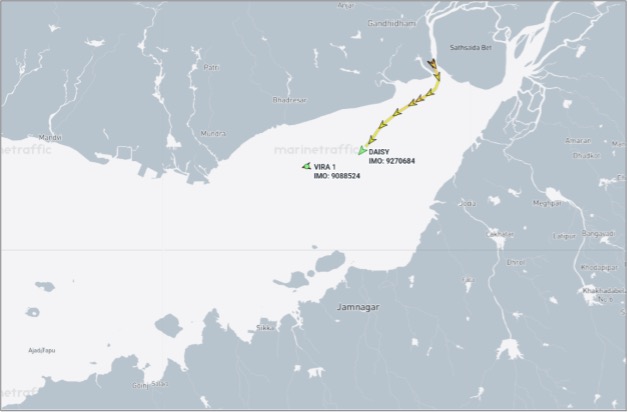
Iran-flagged cargo ships in Gulf of Kutch on November 13 (Credit: Marine Traffic)
Near Sri Lanka, ALOR 2 (IMO 9228538) transited the Laccadive Sea after passing south of Sri Lanka on the way to Kandla, with an estimated arrival of November 20.
The OFAC-sanctioned container ship SHIBA (IMO 9270646) departed Chennai, India, and set sail for Port Klang, Malaysia, with an estimated arrival of November 16.
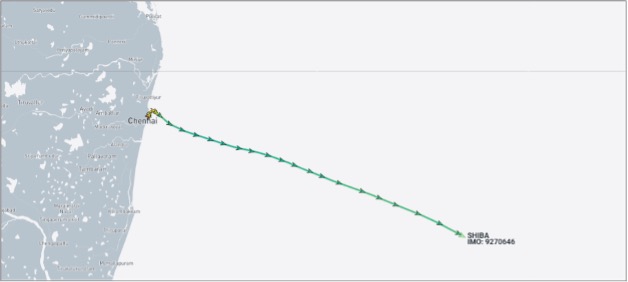
Iran-flagged cargo ship departed Chennai on November 13 (Credit: ESA Copernicus)
At Port Klang, the container ship VELON 1 (IMO 9122473) remained anchored, following cargo operations that took place November 11–12. VELON 1 was the 53rd Iranian cargo vessel to visit Port Klang since the start of the war.
At the Malaysian EOPL, 20 Iranian-flagged cargo ships were located in the anchorage:
ABYAN (IMO 9349667), AMINA (IMO 9305192), ANDIA (IMO 9193197), ARDAVAN (IMO 9465863), ARIES (IMO 9369722), ARTABAZ (IMO 9283007), ARTENOS (IMO 9283021), ARTIN (IMO 9305221), ARZIN (IMO 9284142), BAHJAT (IMO 9405954), BARZIN (IMO 9820269), BEHDOKHT (IMO 9405978), DARYABAR (IMO 9369710), ELYANA (IMO 9165827), GANJ (IMO 9305219), GOLAFRUZ (IMO 9323833), KASHAN (IMO 9270696), PARISAN (IMO 9465851), PARNIA (IMO 9167265), RADIN (IMO 9820257), and RAYEN (IMO 9820245). Most of these vessels will likely remain in the EOPL while the blockade is in force, receiving regular logistics support from Malaysian service providers, despite the risk of secondary sanctions from OFAC.
The container ship TAVA 4 (IMO 9292151) departed the EOPL, transited the Singapore Strait, westbound into the Malacca Strait and is headed to Kandla, India, with an estimated arrival on November 21. TAVA 4 had previously visited Zhuhai, China.
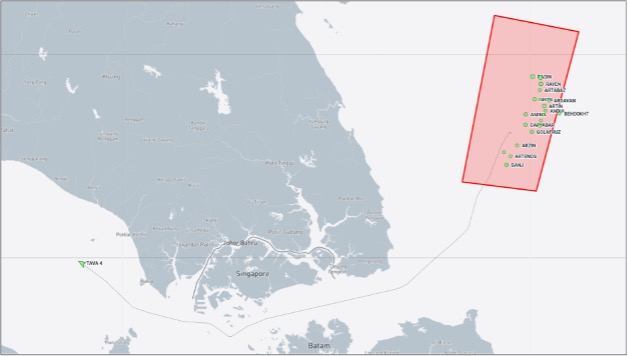
Iran-flagged cargo ships in the EOPL on November 13 (Credit: Marine Traffic)
The container ship AREZOO (IMO 9165786) continued south into the Java Sea via the Karimata Strait to Jakarta from Belewan, with an estimated arrival on November 15. Meanwhile, NADIA (IMO 9122461) transited the Natuna Sea toward the South China Sea on its way to Shanghai, China, with an estimated arrival of November 24.
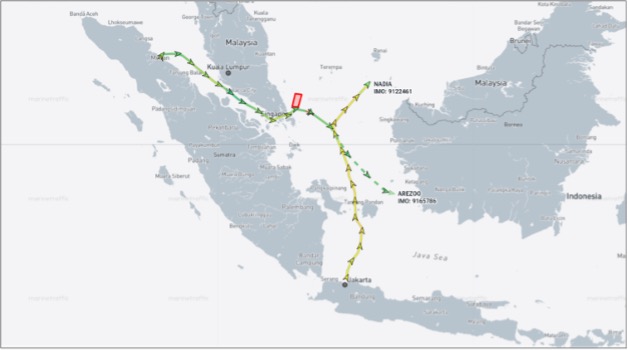
The bulk cargo ship PARSHAD (IMO 9387786) resumed sailing south in the Gulf of Thailand after previously displayed "Not Under Command" status on AIS. It lists its destination as Bandar Imam Khomeini (BIK), Iran, but will likely stop at the Malaysian EOPL before continuing onward. Meanwhile, the bulk cargo ship DELNAVAZ (IMO 9387803) has remained anchored at Phuket since August 12.
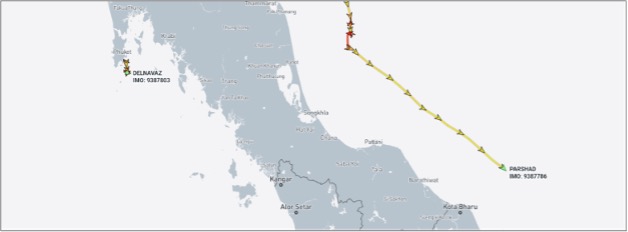
Iran-flagged cargo ships in Thai waters on November 13 (Credit: Marine Traffic)
The container ship FLORA (IMO 9349576) arrived and anchored at Zhuhai today after previously departing Shanghai.
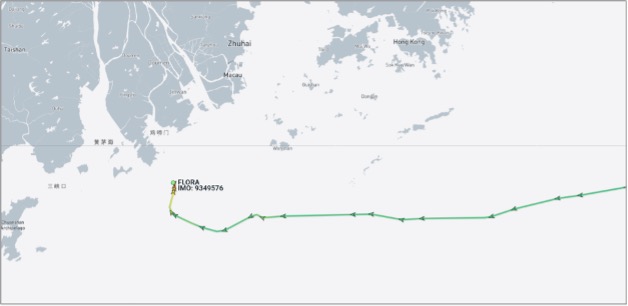
Iran-flagged cargo ship near Zhuhai on November 13 (Credit: Marine Traffic)
At Lamu, Kenya, the Iranian-flagged container ships HAMOUNA (IMO 9820271), NESHAT (IMO 9167277), andGOLSAN (IMO 9165815) remained anchored. Meanwhile, the container ship SHAMIM (IMO 99270658) departed Mombasa port heading for Lamu, with an estimated arrival of November 14.
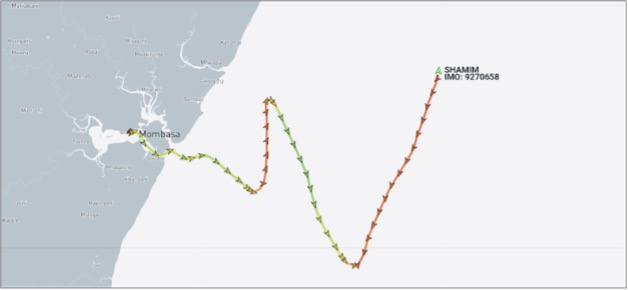
Iran-flagged cargo ship near Mombasa on November 13 (Credit: Marine Traffic)
Receive Iran News in Your Inbox.
Eye on Iran is a news summary from United Against Nuclear Iran (UANI), a section 501(c)(3) organization. Eye on Iran is available to subscribers on a daily basis or weekly basis.