Iran Shipping Update – October 8, 2026
President Trump announced an unprecedentedly sweeping “Economic D-Day” operation against the Iranian regime on August 19. Meanwhile, the security situation in the Strait of Hormuz remains highly volatile as the Iranian regime continues to target commercial shipping and Gulf States.
For UANI’s recommendations for U.S. sanctions on Iran following “Economic D-Day,” read here.
UANI Trip to the Malaysian Eastern Outer Port Limits (EOPL) anchorage
On September 16, the UANI team chartered a typical supply vessel and travelled 100 nautical miles into the South China Sea to witness and expose the illicit activities of the Ghost Fleet in the Malaysian EOPL anchorage. To read the Wall Street Journal op-ed covering the trip—authored by UANI CEO Ambassador Mark Wallace and Chairman Governor Jeb Bush—click here.
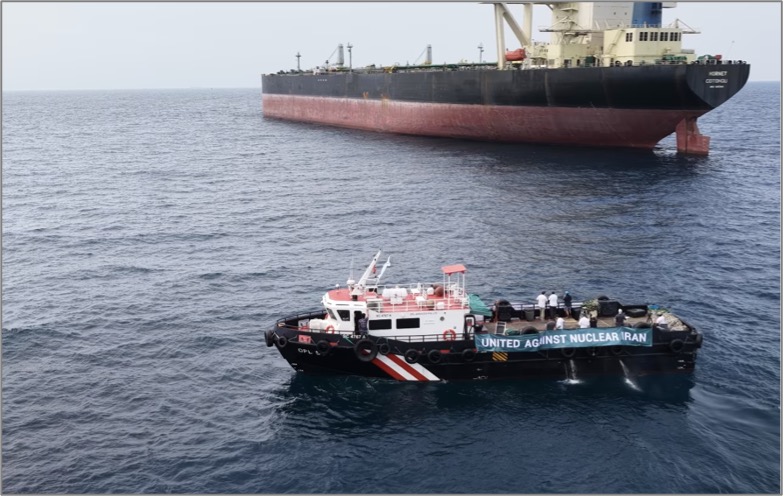
UANI team supply vessel in the Malaysian EOPL on September 16 (Credit: UANI)
U.S. Blockade and Sanctions
On July 14, U.S. forces reimposed the blockade against vessels transiting to or from Iranian ports and coastal areas while supporting compliant traffic in regional waters. As of October 5, U.S. forces have redirected 130 commercial vessels trying to run the blockade, disabled three that didn’t comply, and boarded two to ensure total compliance.
Today, OFAC sanctioned 22 ghost fleet vessels responsible for transporting millions of barrels of Iranian crude oil and petrochemical products. 10 of these 22 recently sanctioned tankers were previously listed on UANI’s Ghost Armada.
Houthi Blockade
On July 20, Yemen’s Iran-backed Houthis declared a naval blockade against Saudi Arabian ports. Media reports also indicate that the Houthis have seized islands in the Bab el-Mandeb and the port of Mokha. On October 4, there was an attempted attack on a tanker located south of Mokha.
While Houthi threats and attacks against Saudi-linked shipping initially prompted some tankers to reroute, transits have been slowly rising over the past week—likely reflecting a decrease in maritime strikes—according to data published by Joint Maritime Information Center (JMIC).
Status of the Strait of Hormuz
Since the start of the Iran War, 97 maritime incidents involving commercial vessels have been reported across the Persian Gulf, Strait of Hormuz, and Gulf of Oman. According to the International Maritime Organization (IMO), these incidents have resulted in 24 seafarer deaths.
Between September 29 and October 6, Iran struck at least 13 tankers transiting the Strait of Hormuz. The attacks have caused fires, engine room damage, and power failures. So far, the U.S. has not publicly responded to these attacks.
Prior to the outbreak of the Iran War, about 138 vessels transited the Strait of Hormuz daily. Throughout the conflict, marine traffic data showed large clusters of loitering vessels on both sides of the Strait of Hormuz, with many ships refraining from transiting due to safety concerns. After the signing of the MoU, JMIC reported an increase in open transits through the Strait of Hormuz. On June 24, JMIC recorded 54 transits, the highest daily total since the outbreak of the conflict. As of October 3, JMIC has reported a total of 1,033 vessels transiting the Strait of Hormuz since June 18, for a total of 1,646 since the beginning of the war.
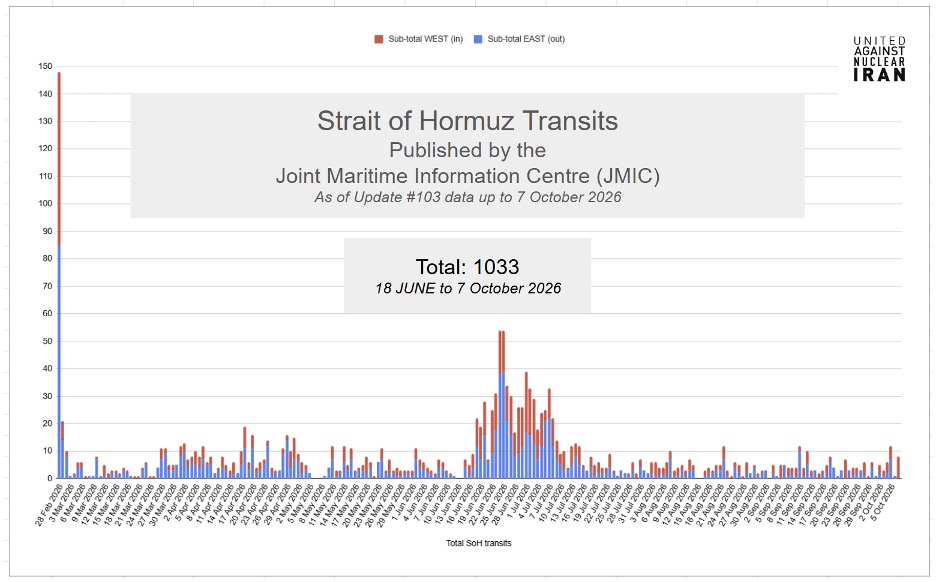
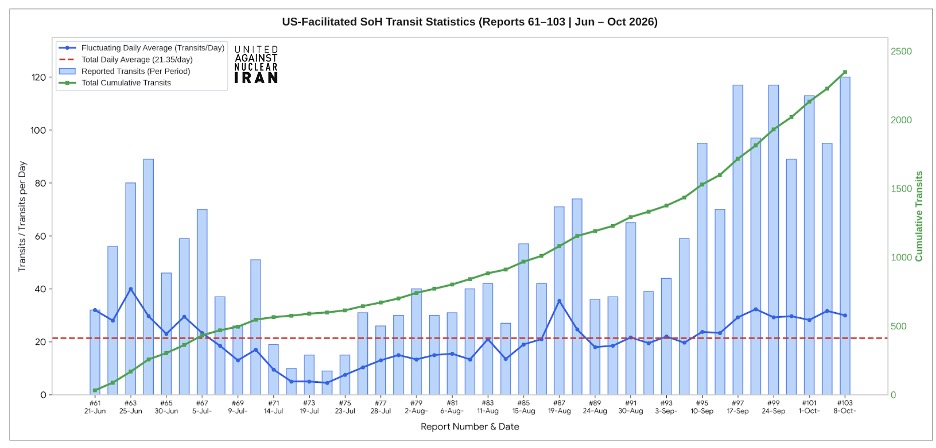
In the past months, an increasing number of vessels are transiting the southern corridor of the Strait of Hormuz bidirectionally without broadcasting AIS location data, with many of these movements facilitated by U.S. forces.
U.S.-facilitated transits through the Strait of Hormuz averaged 30 vessels per day, with a record 120 transits recorded during the latest 96-hour period (October 4–7), bringing the month-to-date October total to 215 transits across 7 days at 30.71 per day, and raising the cumulative campaign total to 2,348 transits at an overall average of 21.35 per day across 110 monitored days.
Iranian Oil-Laden Tankers Departing the Gulf of Oman
Tankers laden with Iranian oil and petrochemicals are currently clustering in anchorages along the Iranian coastline due to the reinstatement of the U.S. blockade on Iranian ports. Since the blockade resumed, around only eight handymax-size tankers carrying Iranian LPG and naphtha have successfully passed the blockade line. However, UANI has not tracked any tanker laden with Iranian crude oil that has successfully departed the Gulf of Oman and avoided enforcement actions by U.S. forces since July 12, before the blockade was reinstated.
Iranian Oil-Laden Tankers
UANI has identified at least 51 tankers laden with Iranian oil—primarily crude, but also other petroleum products and LPG—currently operating along the Iranian coastline.
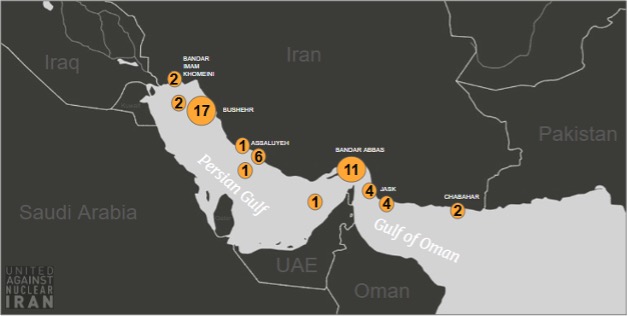
Positions of tankers laden with Iranian oil on October 8 (Credit: UANI)
A cluster of laden tankers remain near Kharg Island, Iran. On October 8, 12 laden tankers were observed anchored east of Kharg, while an extra five tankers are located further south of the Island. Meanwhile, no tankers were observed loading at Kharg Island today.
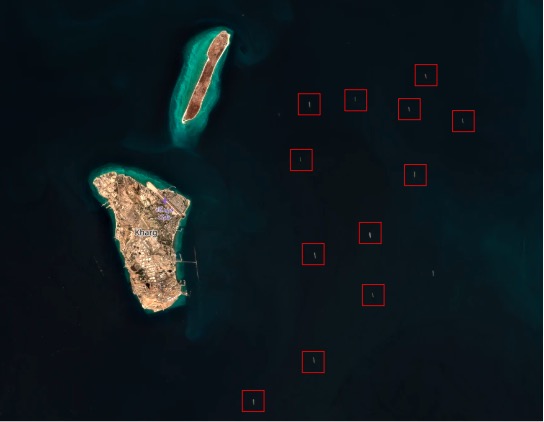
Positions of tankers laden with Iranian oil near Kharg Island on October 8 (Credit: UANI)
Number of Iranian Loadings
Since the U.S. reinstated the maritime blockade on July 14, UANI has tracked at least 39 Iranian oil and petrochemical loadings, eight of which originated from Kharg Island.
Iran-Linked Tankers Globally
UANI has also monitored Iran-flagged tankers operating beyond the Persian Gulf, particularly in the waters near Malaysia. In the days leading up to the UANI team’s trip to the Malaysian EOPL in the South China Sea, it was purported that Malaysian authorities had conducted enforcement actions in the anchorage. Prior to purported recent enforcement actions, seven Iran-flagged tankers had been loitering in the anchorage, namely: HUMANITY (IMO 9180281),STARLA (IMO 9569621), HILDA I (IMO 9357389), DAN (IMO 9357729), HAPPINESS I (IMO 9212905), HEDY (IMO 9212888), and DORENA (IMO 9569669).
DORENA, HEDY, HUMANITY, and STARLA remained in the EOPL and were last observed clustered together in the anchorage in satellite imagery on October 8. These tankers are most likely empty after already conducting STS transfers of Iranian crude.
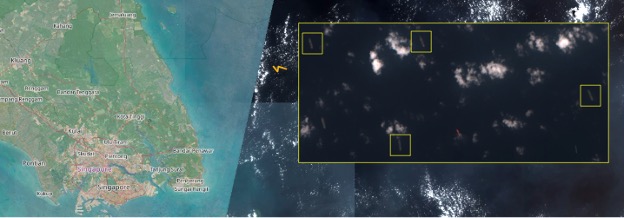
Iran-flagged tankers in the Malaysian EOPL on October 8 (Credit: ESA Copernicus)
However, most likely due to recent enforcement actions by Malaysian authorities, the other Iran-flagged tankers had departed the EOPL and transited the South China Sea northbound to anchorages south of Hong Kong and Zhuhai, China. HILDA 1 conducted an STS transfer of Iranian crude oil south of Zhuhai on September 17, while HAPPINESS I conducted an STS of Iranian crude oil south of Hong Kong on September 22. It is not known exactly where DAN relocated to; however, the tanker briefly broadcasted its location on AIS on September 25 transiting the South China Sea southbound towards the EOPL.
In addition, at least 24 tankers listed on UANI's Ghost Armada were anchored or loitering north of the EOPL anchorage with their AIS signals active. These tankers most likely departed the anchorage due to the purported recent enforcement actions of the Malaysian maritime authorities. Meanwhile, about 22 tankers listed on UANI’s Ghost Armadacontinued loitering in the EOPL anchorage, demonstrating that Ghost Fleet tankers continue to operate with impunity across Southeast Asia's sea lanes.
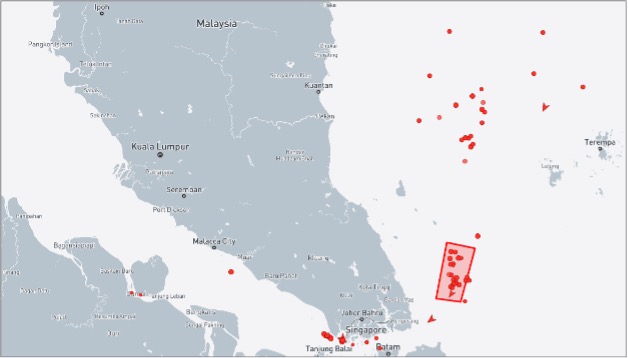
Ghost Armada tankers near Malaysia on October 8 (Credit: Marine Traffic)
Because of the U.S. blockade, Iran-flagged tankers, empty after conducting STS transfers, are now loitering at anchorages across the Indo-Pacific rather than transiting back to Iranian ports. DIONA (IMO 9569695) is loitering offshore Duqm, Oman, while 20 empty Iran-flagged tankers are currently loitering off Sri Lanka. These tankers are DREAM II (IMO 9356593), STREAM (IMO 9569633), HALTI (IMO 9212890), SEA CLIFF (IMO 9569657), HERO II (IMO 9362073), SILVIA I (IMO 9172052), SNOW (IMO 9569619), HELM (IMO 9357391), DUNE (IMO 9569712), DEEP SEA (IMO 9218492), DIAMOND II (IMO 9218478), DINO 1 (IMO 9569671), SONIA I (IMO 9357365), DORE (IMO 9357717), HERBY (IMO 9362059), SEVIN (IMO 9357353), FELICITY (IMO 9183934), HENNA (IMO 9212929), AMBER (IMO 9357406), and HUGE (IMO 9357183). From August 23, most of these Iran-flagged tankers departed the Galle anchorage and started loitering within the vicinity of Sri Lanka, possibly driven by heightened regulatory or enforcement pressure following press coverage of UANI’s monitoring of Iran-flagged tankers in Sri Lanka’s Exclusive Economic Zone (EEZ). By September 29, many of these tankers relocated to another Sri Lankan anchorage further north up the coast and are intermittently broadcasting their locations via AIS. Further press coverage also highlighted the status of these tankers loitering near Sri Lanka.
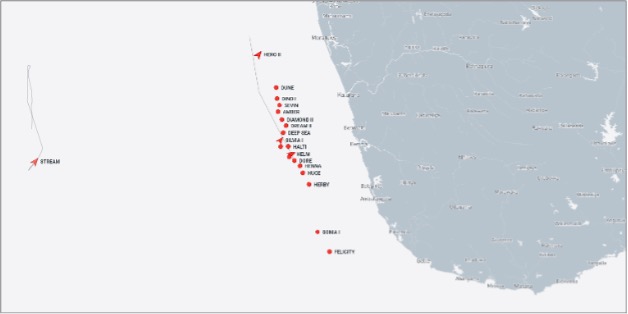
Iran-flagged tankers near Sri Lanka on October 8 (Credit: Marine Traffic)
Iran-Flagged Cargo Ships Globally
Despite ongoing pressure of OFAC sanctions and new constraints of the U.S. blockade on Iranian ports, approximately 50 Iranian-flagged cargo ships continue to operate openly across sea lanes, ports, and anchorages throughout the Indo-Pacific region, the Indian Ocean, the Mediterranean, and the Baltic Sea.
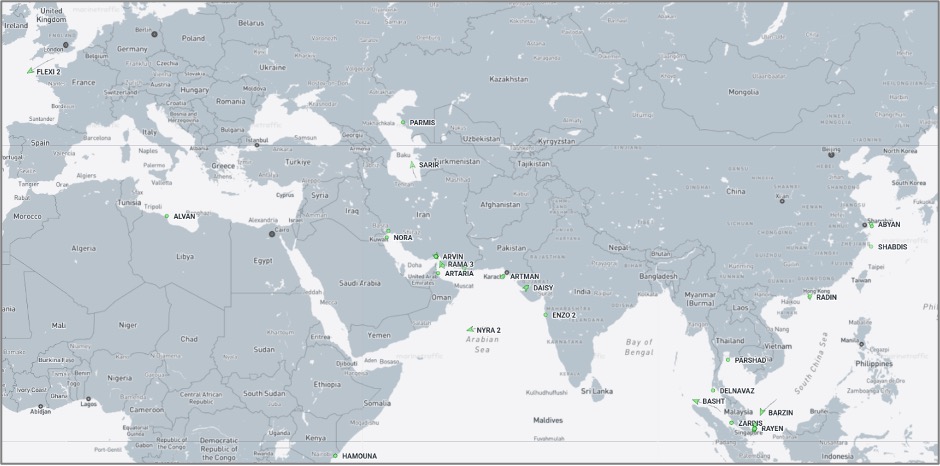
Iran-flagged cargo vessels across the region on October 8 (Credit: Marine Traffic)
Near Karachi, Pakistan, the falsely flagged Iranian-linked container ships BATIS (IMO 9465760) and ARTMAN (IMO 9405930) remained anchored in the Karachi OPL anchorage.
At the Gulf of Kutch in India, SHAMIM (IMO 9270658), VELON 1 (IMO 9122473), and DAISY (IMO 9270684) remained anchored near Kandla Port.
At Mumbai, India, the OFAC-sanctioned and falsely flagged container ship ENZO 2 (IMO 9236652) pulled into the PSA Mumbai container terminal for cargo ops and then departed. Its destination is not known. The PSA International Code of Business & Ethics states that “PSA fully complies with all applicable Sanctions Laws.” It is not known if PSA International is aware of the risk of secondary U.S. sanctions.
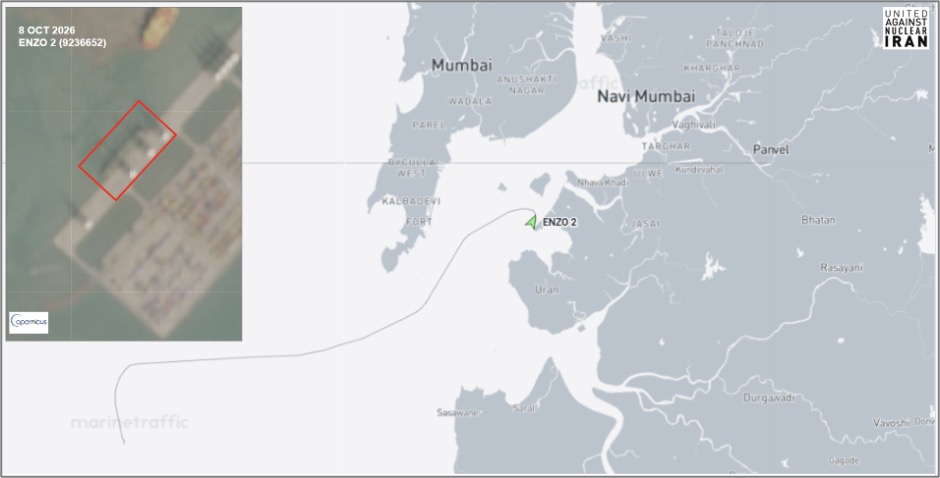
Iran-flagged cargo vessel in Mumbai on October 8 (Credit: Marine Traffic & ESA Copernicus)
At Port Klang, Malaysia, the container ships AREZOO (IMO 9165786), ZARDIS (IMO 9349679), and FLORA (IMO 9349576) remained in the anchorage.
At the Malaysian EOPL, 17 Iranian-flagged cargo ships were in or near the anchorage: BEHDOKHT (IMO 9405978), DARYABAR (IMO 9369710), PARISAN (IMO 9465851), GOLAFRUZ (IMO 9323833), ANDIA (IMO 9193197), BAHJAT (IMO 9405954), ARDAVAN (IMO 9465863), KASHAN (IMO 9270696), ARZIN (IMO 9284142), PARNIA (IMO 9167265), AMINA (IMO 9305192), BASHT (IMO 9346536), ARIES (IMO 9369722), ARTIN (IMO 9305221), GANJ (IMO 9305219), RAYEN (IMO 9820245), VIRA 1 (IMO 9088524), and ARTABAZ (IMO 9283007). Most of these vessels will likely remain in the EOPL while the U.S. blockade is still in force, receiving regular logistics support from Malaysian service providers, despite the risk of secondary sanctions from OFAC.
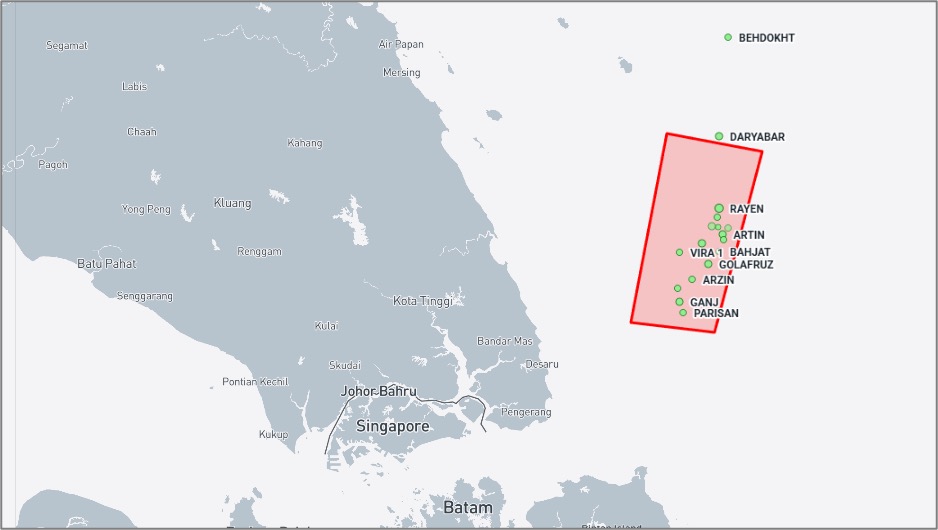
Iran-flagged cargo ships near the Malaysian EOPL on October 8 (Credit: Marine Traffic)
In Thailand, the bulk carrier PARSHAD (IMO 9387786) continued to loiter in international waters about 40 km south of Sattahip. Meanwhile, the bulk carrier DELNAVAZ (IMO 9387803) remained anchored just south of Phuket Island in the Andaman Sea. The US Aircraft Carrier George H.W. Bush remained anchored near Phuket, about 10 km north of DELNAVAZ, which has been anchored there since August 28, after conducting cargo operations at Phuket Deep Sea Port despite the risk of secondary sanctions from OFAC.
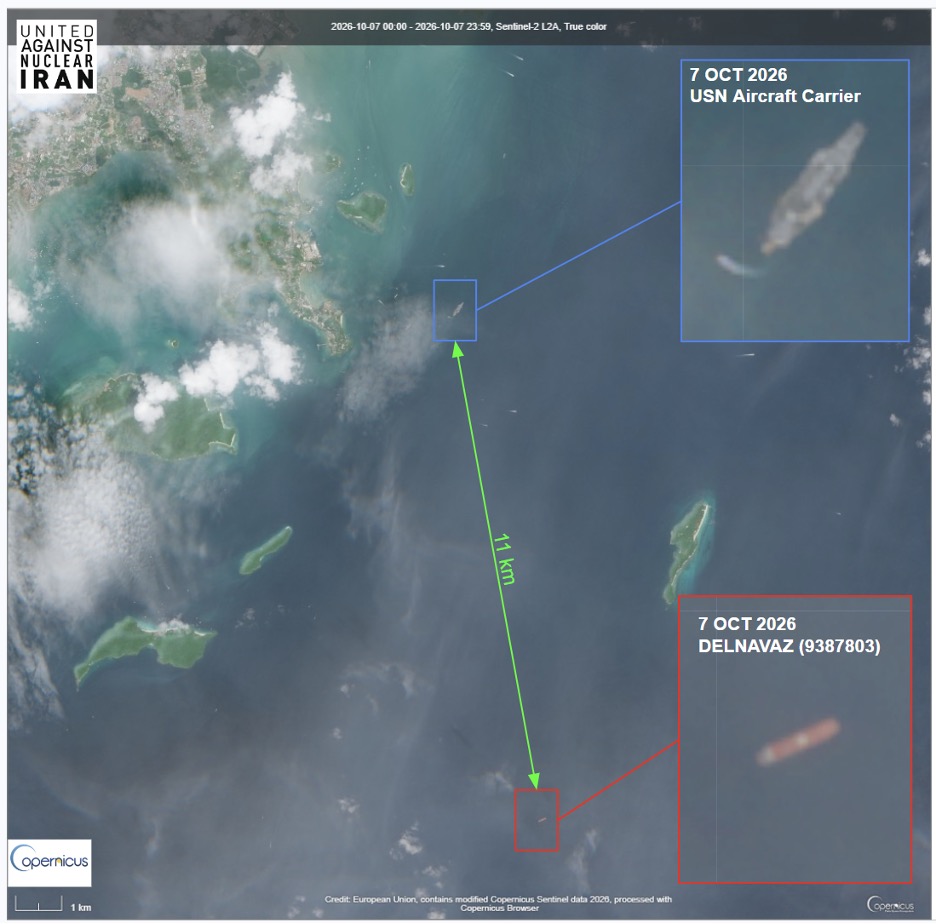
Iran-flagged cargo ship and US Navy ship near Phuket on October 7 (Credit: ESA Copernicus)
The container ship SHIBA (IMO 9270646) continued to loiter for a third day in the Gulf of Tonkin, near the approaches to Haiphong, Vietnam.
At Zhuhai, China, the container ships ARTENOS (IMO 9820245) and RADIN (IMO 9820257) remained in the anchorage. Zhuhai Port at Gaolan Island has previously been identified in media reports as a source of precursor chemicals for rocket fuel. ALOR 2 (IMO 9228538), which departed Zhuhai, is now drifting in a position about 290 km to the south.
Near Shanghai, the container ships ASYAN (IMO 9165803) and ABYAN (IMO 9349667) remained anchored at CJK anchorage. Meanwhile, BEHTA (IMO 9349590) and SHABDIS (IMO 9349588) both loitered in international waters east of the Dachen Sea.
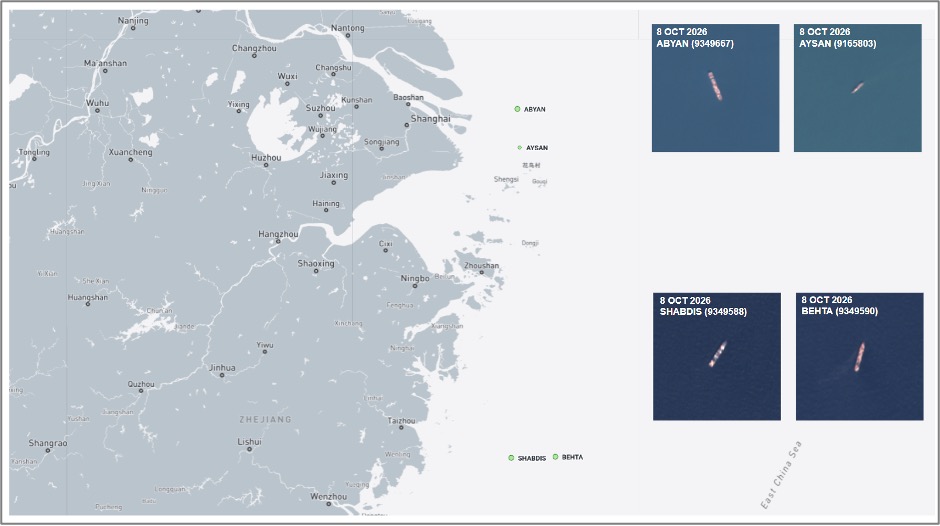
Iran-flagged cargo ships near Shanghai on October 8 (Credit: Marine Traffic & ESA Copernicus)
In Europe, the container ship FLEXI 2 (IMO 9246322) transited the Dover Strait after an unusual manoeuvre. This ship did a similar turn-around on its inbound transit. The Dover Strait is a mandatory reporting area, and ships passing through the UK section may be required to provide proof of valid insurance when requested by UK authorities, even if they are not calling at a UK port. FLEXI 2 is next expected to transit the Gibraltar Strait on October 12 and arrive at the Port Said anchorage on October 20.
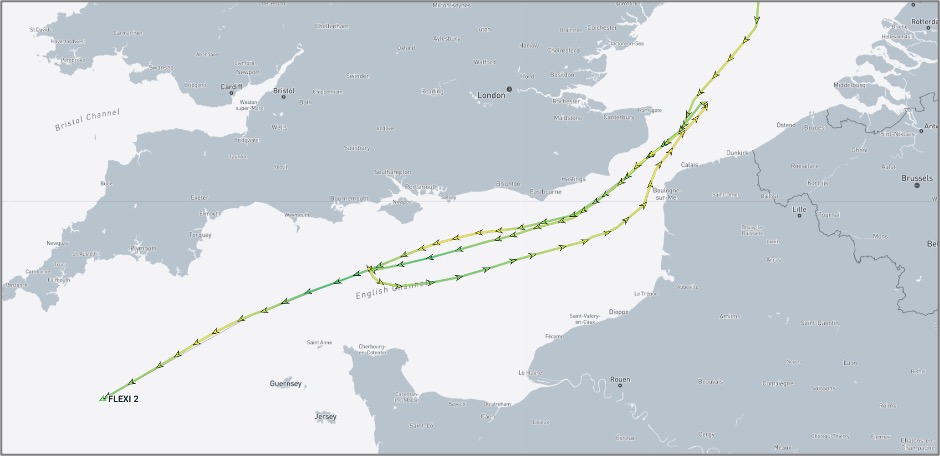
Iran-flagged cargo ship in the Dover Strait on October 8 (Credit: Marine Traffic)
The Iranian-flagged container ship HAMOUNA (IMO 9820271) completed cargo operations in the container terminal at Lamu port, Kenya, and joined NESHAT (IMO 9167277) and GOLSAN (IMO 9165815) at the anchorage.
Receive Iran News in Your Inbox.
Eye on Iran is a news summary from United Against Nuclear Iran (UANI), a section 501(c)(3) organization. Eye on Iran is available to subscribers on a daily basis or weekly basis.