The Four-Decade Search for the Elusive Moderate in the Iranian Regime
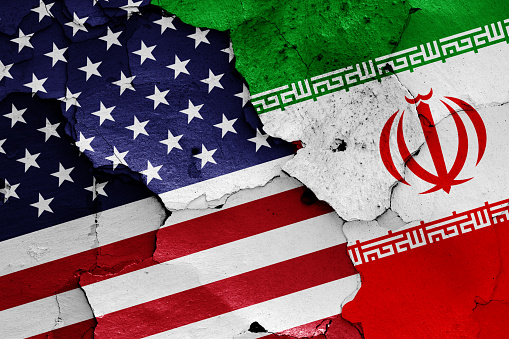
For 47 years, U.S. administrations of both parties have tried to empower elusive Iranian moderates at the expense of stubborn hardliners in Iran to improve relations. But time and again, American hopes were dashed. U.S. presidents have repeatedly outstretched a hand to the Islamic Republic, only to be met with a clenched fist.
The History
At the dawn of the Islamic Revolution in 1979, the Carter administration searched for moderate elements of the new regime of Ayatollah Ruhollah Khomeini. During a January 1979 meeting in the White House Situation Room, the Central Intelligence Agency (CIA) assessed that Khomeini would allow moderates to rule Iran, namely his Western-educated supporters and Ayatollah Mohammad Beheshti. Some U.S. officials considered Beheshti someone with whom they could work given his experience living in Germany. That November, however, Iranian students affiliated with the new regime seized the U.S. embassy in Tehran, taking diplomats hostage.
Still the hunt for pragmatic Islamic revolutionaries in Iran continued. A declassified CIA memo dated December 31, 1979, stated that “there are undoubtedly many moderates inside Iran who are displeased with the way Khomeini has handled the hostage situation and the way the country is being neglected and mismanaged.” Carter’s chief of staff, Hamilton Jordan, held secret meetings with Iran’s foreign minister, Sadegh Ghotbzadeh, throughout the hostage crisis to maintain a channel of communication. Ghotbzadeh was later executed.
Despite these American overtures, the Islamic Republic’s anti-American malign behavior continued well after the U.S. diplomats held hostage were released. In 1983, Iran-backed Hezbollah bombed the U.S. Marine barracks in Beirut, killing 241 American servicemembers.
During the Reagan administration, the quest to find reasonable Iranian officials endured. Future President Hassan Rouhani and Ahmad Vahidi, now the commander-in-chief of the Islamic Revolutionary Guard Corps (IRGC), liaised with U.S. officials in covert negotiations trading military hardware for the release of other American hostages in Lebanon. Some American officials hoped this exchange would lead to a broader opening with the Islamic Republic, but the arrangement imploded, resulting in a scandal for the White House.
President George H.W. Bush implicitly included a message for the Iranian regime in his 1989 inaugural address: “Goodwill begets goodwill.” His administration was heartened when the perceived moderate Ali Akbar Hashemi Rafsanjani became Iran’s president that year. Indeed, then as now, Pakistani mediators were dispatched to Tehran, where they found the Islamic Republic seeking gestures in exchange for the release of American hostages in Lebanon. In a Memorandum of Conversation between President Bush and Sultan Qaboos of Oman from August 3, 1989, Bush said that “Rafsanjani might turn out to be more reasonable, but he had some radicals in the government like [Ali Akbar Mohtashamipour, then interior minister] who might make things difficult. There might be a ray of hope, and we didn’t want to mishandle our affairs if there might be a change in Iran.”
Yet the Islamic Republic did not change. On August 6, 1991, Tehran’s intelligence agents assassinated former Iranian Prime Minister Shapour Bakhtiar in France. That October, the Islamic Republic hosted the International Conference on Supporting the Palestinian Intifada, which counterprogrammed the U.S.-sponsored Madrid Peace Conference. The Iran-hosted gathering worked to shore up Iran’s support for Palestinian terrorism, whereas the Madrid Conference focused on Arab-Israeli peacemaking. Months later, on March 17, 1992, Hezbollah bombed the Israeli embassy in Buenos Aires, Argentina, killing 29.
In the Clinton administration, the same pattern repeated itself. The Iranian regime approved the bombing of a Jewish community center in Buenos Aires in 1994, killing 85, and the IRGC was responsible for the 1996 Khobar Towers attack in Saudi Arabia, which took the lives of 19 American servicemembers. Nonetheless, President Bill Clinton saw promise in the 1997 election of Mohammad Khatami as Iran’s president. Clinton sent Khatami a message in 1999, stating that “the United States has no hostile intentions towards the Islamic Republic of Iran and seeks good relations with your government…In order to protect our citizens, which is the first responsibility of any government, and to lay a sound basis for better relations between our countries, we need a clear commitment from you that you will ensure an end to Iranian involvement in terrorist activity…”
Despite Clinton’s entreaty, the Islamic Republic continued to support terrorism. In September 1997, after Khatami took office, Iran-backed Hamas terrorists bombed a shopping mall in Jerusalem, killing a U.S. citizen and wounding other Americans. The following August, al-Qaeda, which was trained by Hezbollah, bombed the U.S. embassies in Kenya and Tanzania.
Iran’s disrespect of the Clinton administration showed in additional ways. The regime sent lower-level diplomats to meet with Secretary of State Madeleine Albright during a high-level meeting on Afghanistan at the United Nations in September 1998. And when the U.S. tried to schedule a meeting between Presidents Clinton and Khatami at the United Nations in 2000, the Iranian side rebuffed the request.
Throughout the George W. Bush administration, American attempts to engage the Islamic Republic continued. Following the 9/11 attacks, the U.S. worked with Iran during the 2001 Bonn Conference on Afghanistan. The American envoy to the conference, James Dobbins, wrote enthusiastically about the constructive participation of then-Deputy Foreign Minister Javad Zarif. At a Tokyo donors conference, Iranian diplomats approached Dobbins, saying “We would like to discuss the other issues with you also.” But while such diplomatic overtures transpired, al-Qaeda’s leadership negotiated with the IRGC’s Quds Force for safe harbor for the terrorist group’s operatives trapped in Tora Bora, Afghanistan.
Later, administration officials met in Iraq with Iranian representatives. In May 2007, then-U.S. Ambassador to Iraq Ryan Crocker gathered with his Iranian counterpart, Hassan Kazemi Qomi, and a regime delegation for the first bilateral talks with the Islamic Republic in decades. The American side raised concerns with Iran-backed support for militias killing U.S. servicemembers. The Islamic Republic proposed establishing a trilateral security mechanism comprised of the United States, Iraq, and Iran. But Iran-enabled attacks on coalition forces continued afterwards, throughout 2008.
In his 2009 inaugural address, President Barack Obama pledged to authoritarian leaders that “we will extend a hand if you are willing to unclench your first.” His administration tried to empower Iranian figures like Rouhani and Foreign Minister Javad Zarif because it considered them pragmatists who aspired to a different kind of relationship with America. Yet these decisions were above Rouhani and Zarif’s paygrade, lying instead with then-Supreme Leader Ali Khamenei and the IRGC, who did not seek any rapprochement. Even after the inking of the Joint Plan of Action (JPOA) in 2013 and the Joint Comprehensive Plan of Action (JCPOA) in 2015, the Iranian regime continued its aggression, hostage taking, and terrorism.
The Biden administration tried to court the Iranian regime by attempting to rejoin the JCPOA that President Trump rightfully withdrew from in 2018. But after months of painstaking negotiations, the Iranian leadership rejected multiple offers to do so. Furthermore, IRGC agents tried to assassinate multiple former U.S. officials, all while the Biden administration extended a diplomatic olive branch, to avenge the targeted killing of Qasem Soleimani, the former IRGC Quds Force commander, with the blood of Americans on his hands.
Today’s Iranian Leadership is Just as Bloodstained as their Predecessors
The Trump administration now tests the latest iteration of the Islamic Republic’s leadership after Operation Epic Fury in the hopes of finding Iranian pragmatists with whom to transform the bilateral relationship. Today, figures like Parliament Speaker Mohammad Bagher Ghalibaf, President Masoud Pezeshkian, and Foreign Minister Abbas Araghchi are considered the new moderates.
However, multiple American citizens continue to languish behind bars in Evin Prison as hostages. If the Iranian regime were truly interested in peace with the United States, it would release them.
Furthermore, the character of the Iranian regime’s leaders points in the direction of continued repression at home and belligerence abroad. Ghalibaf is a creature of the IRGC, having served as deputy commander of the Basij, a fearsome instrument of state domestic oppression; commander of the Guards’ Khatam Al-Anbiya Construction Headquarters; commander of the IRGC’s Air Force, which is responsible for missile development; and head of Iran’s national police, which the U.S. and other governments have sanctioned for horrific human rights abuses. Ghalibaf later became mayor of Tehran and was implicated in major corruption scandals, covering up roughly $3 billion embezzled from the municipality.
As speaker of parliament, Ghalibaf also sits on the same Supreme National Security Council (SNSC) that gave the order to fire on Iranian pro-freedom protesters in 2022 and in 2026, killing tens of thousands. An audio tape of Ghalibaf emerged where he bragged about repressing Iranians during various protest cycles in the Islamic Republic’s history. Regarding the 1999 student demonstrations, Ghalibaf said, “photographs of me are available showing me on the back of a motorbike…beating them [the protestors] with wooden sticks…I was among those carrying out beatings on the street level and I am proud of that. I didn’t care, I was a high-ranking commander.”
In 2003, commenting on another round of student demonstrations, Ghalibaf proclaimed that “I told them as head of the police, I will demolish anyone who would show up tonight on the campus to protest.” During the 2009 Green Movement protests, which the Islamic Republic crushed, Ghalibaf also boasted that “although the [Tehran] mayoralty is not a security agency, we were ranked third in how well we responded…and this is amongst intelligence-security organs, not all state organs.” These are not the words of someone who carries regrets.
The new leadership’s extremism goes beyond Ghalibaf. Ahmad Vahidi, the IRGC’s new commander-in-chief, is subject to an INTERPOL Red Notice for the aforementioned 1994 bombing in Buenos Aires. He served as interior minister during the regime’s crackdown on the Woman, Life, Freedom movement in 2022, for which the U.S. and European Union sanctioned him under human rights abuse authorities. The new supreme leader, Ali Khamenei’s son Mojtaba, liaised with the same security institutions murdering Iranians when he served in his father’s powerful office, and played a leading role in domestic crackdowns. Mojtaba is ensconced in power, surrounded by a patronage network of hardened security and intelligence operatives, the Habib Circle, who have been complicit in some of the Islamic Republic’s worst crimes since 1979. One member of the Habib Circle, Hossein Taeb, is the former head of the IRGC’s Intelligence Organization, responsible for terror plots across the world and the deaths of countless Iranians. Mehdi Khamoushi, thought to be Mojtaba’s new chief of staff, has praised Hezbollah and was the longtime head of the Islamic Development Organization, charged with promoting the regime’s core ideology. Khamoushi is also implicated in corruption scandals from his time at the helm of the Awqaf (Endowments) Organization.
Mojtaba Khamenei’s decision not to directly endorse the U.S.–Iran Memorandum of Understanding is telling. The new supreme leader hedged—just like his father—in order to protect himself, his position, and the Iranian system’s enmity against America. Mojtaba called Washington an “enemy” and set the stage to blame President Pezeshkian for problems with the MOU and disclaim any responsibility, despite the buck stopping with the supreme leader. Iranian newspapers have been framing diplomacy as an extension of the Islamic Republic’s confrontation with America, not a substitute for it. This does not sound like a regime prepared to fundamentally change.
Thus, meet the new bosses, same as the old ones. Some faces have changed and some occupy slightly different positions, but their hands are bloodstained and their track records demonstrate commitment to engaging in terrorism and propagating the Islamic Revolution. There may be a difference in style—Iranian negotiators are now allowed to meet directly with U.S. officials and have reportedly agreed to a hotline and deconfliction mechanisms. But the central anti-American tenets of the Islamic Republic remain the same. The last 47 years of U.S. engagement with Iran should warn of the limits of what diplomacy can achieve with the regime in Tehran.
Jason M. Brodsky is the policy director of United Against Nuclear Iran.
Receive Iran News in Your Inbox.
Eye on Iran is a news summary from United Against Nuclear Iran (UANI), a section 501(c)(3) organization. Eye on Iran is available to subscribers on a daily basis or weekly basis.