The U.S. Seizure of VERONICA and the Vessel’s History of Transporting Iranian Crude
On January 15, 2026, U.S. maritime forces executed another seizure of the motor tanker VERONICA (IMO: 9256860) in the Caribbean Sea. The operation, conducted as part of Operation Southern Spear, marks the sixth vessel seizure and represents a significant development in the enforcement of the U.S. blockade offshore Venezuela.
VERONICA was sanctioned by U.S. OFAC on February 22, 2022, because it was owned by PSB Lizing OOO, a leasing subsidiary of Russia’s state-controlled Promsvyazbank (PSB), which OFAC designated for operating in Russia’s defense-related and financial services sectors. The vessel is a repeat offender of international sanctions, embodying the interconnected nature of the Iranian, Russian, and Venezuelan dark fleets. While its recent activities were focused on the Caribbean, its history is deeply rooted in the transportation of Iranian oil.
Just weeks prior to its seizure, the vessel attempted to shed its identity. In early January 2026, the ship was in fact renamed GALLILEO and reflagged from Iran to Russia. Reflagging is a common tactic used by sanctioned operators to evade detection, but attempting to seek refuge and protection under the Russian flag is a new strategy employed by dark fleet vessels.
The seizure of VERONICA follows the recent interdiction of the BELLA 1 (renamed MARINERA), another Russian re-flagged vessel. These actions send a clear, unambiguous message: the Russian flag is no longer a deterrent to U.S. global maritime enforcement. Moreover, these recent developments reveal how the U.S. now treats Russia, Venezuela, and Iran's dark fleets as a singular, interconnected threat to global security.
Despite its Russian flag, the VERONICA has a prolific record of transporting Iranian crude. To date, the vessel has moved over 7.4 million barrels of Iranian oil, generating well over 500 million dollars for the Iranian regime. These illicit revenues directly fund the Iranian regime’s nuclear and missile program, as well as the domestic security infrastructure that is currently violently suppressing Iranians.
Throughout 2025, VERONICA was a primary fixture in the Venezuelan oil trade, frequently engaging in ship-to-ship (STS) transfers in the Caribbean to bypass U.S. sanctions. VERONICA’s last known transportation of Iranian oil, however, was back in August 2024, where it received an STS from RAMONA I (IMO: 9233222), a tanker than is listed on UANI’s Ghost Armada, east of the Larak Island and then transported the crude to Baniyas, Syria during the Assad regime’s tenure.
Evidence of VERONICA Transporting Iranian Crude
On August 18, 2024, satellite imagery catches RAMONA I loading one million barrels of Iranian crude at Sirri Island. VERONICA is positioned near Sirri Island while RAMONA I loads.
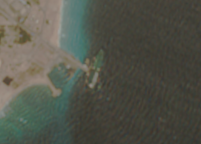
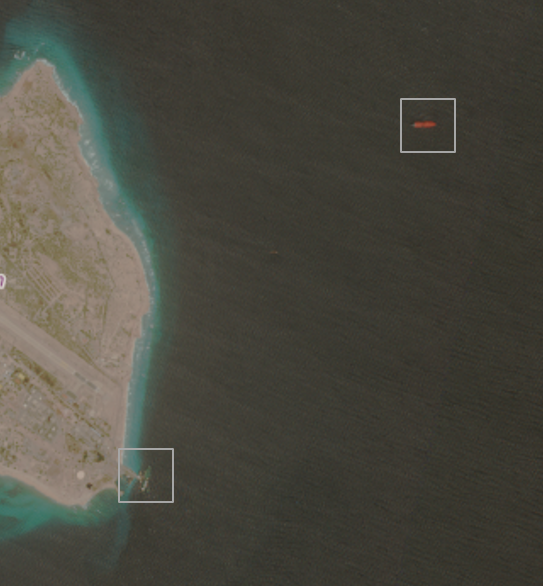
Satellite image of RAMONA I loading Iranian oil at Sirri Island, Iran on August 18, 2024 (Copernicus)
On August 26, 2024, satellite imagery indicates that VERONICA received Iranian crude from RAMONA I via an STS transfer by Larak Island, Iran, at 26.890 ° N, 56.535° E.
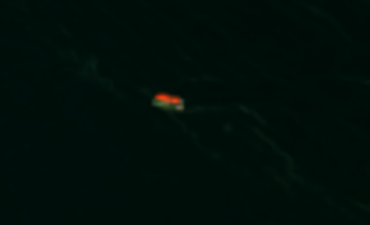
Satellite image of STS between RAMONA and VERONICA (Sentinel Hub)
VERONICA then transported this Iranian crude to Baniyas, Syria, providing a vital energy lifeline to the now-fallen Assad regime.
Looking Ahead
UANI continues to monitor several other high-interest vessels currently attempting to breach the U.S. blockade in the Caribbean. The following map highlights their most recent known positions based on either AIS data or satellite imagery:

Map of Oil Tankers Breaching the U.S. Blockade in January 2026 (Last Updated: 22 January)
The ejection of the VERONICA from the global dark fleet is a significant step in degrading the illicit oil trade that sustains the regimes in Tehran, Moscow, and Caracas. While this seizure marks one step forward in global sanctions enforcement, UANI remains dedicated to identifying the vessels and entities facilitating this illicit trade ensuring that neither rebranding nor re-flagging offers any shield against accountability.
Receive Iran News in Your Inbox.
Eye on Iran is a news summary from United Against Nuclear Iran (UANI), a section 501(c)(3) organization. Eye on Iran is available to subscribers on a daily basis or weekly basis.