Iran’s Wartime Military and Security Shakeup
This week, Supreme Leader Mojtaba Khamenei made changes to Iran’s senior military and security command. His choices reflect a continued effort to consolidate his power.
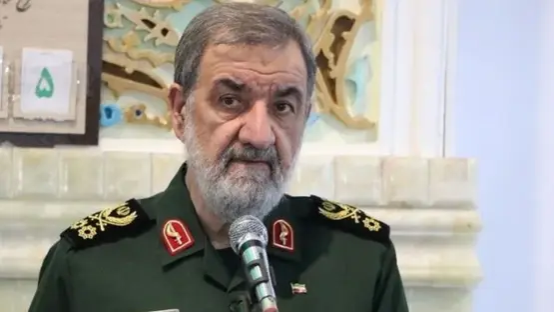
Supreme National Security Council Secretary Mohsen Rezaee
The first change was the appointment of Mohsen Rezaee as secretary of the Supreme National Security Council (SNSC). Born in 1954 in Masjed Soleyman, Iran, Rezaee served prior to the Islamic Revolution as a member of the Mansouroun guerilla group, which attacked the Pahlavi monarchy and its Western supporters, murdering American citizens. After the revolution, the founding supreme leader, Ruhollah Khomeini, named Rezaee as the commander-in-chief of the Islamic Revolutionary Guard Corps (IRGC) when he was only 27 years old. Rezaee led the IRGC during the Iran–Iraq War, a formative experience for him. As commander, Rezaee drew criticism for Operation Karbala-4, a regime attempt to capture Basra in which thousands of Iranians were killed and wounded.
As IRGC commander, Rezaee oversaw a particularly active period of the Islamic Republic’s terrorism, from the bombings of the Israeli embassy and the AMIA Jewish community center in Buenos Aires, Argentina, in 1992 and 1994, respectively, to the 1996 Khobar Towers attack in Saudi Arabia. INTERPOL later issued a Red Notice for Rezaee due to his role in the AMIA bombing.
Rezaee led the Revolutionary Guards until 1997, the longest tenure of anyone in that post. He left at the beginning of the first term of reformist President Mohammad Khatami. Rezaee was perceived by reformists as having supported Khatami’s conservative opponent in that year’s election.
Supreme Leader Ali Khamenei found a landing spot for Rezaee, appointing him as secretary of the Expediency Council, where he served from 1997 to 2021. After leaving the Expediency Council, Rezaee filled several roles, including as secretary of the Supreme Council for Economic Coordination and vice president for economic affairs. However, Rezaee’s post-IRGC posts did not befit his ambitions, as he was no longer a central decision-maker. Rezaee simultaneously dabbled in electoral politics, losing several races, including for parliament in 2000 and for president in 2005, 2009, 2013, and 2021.
However, after Operation Epic Fury commenced, Rezaee was named to more consequential positions. This likely occurred due to U.S. and Israeli strikes killing many of the top figures in Iran’s military and security establishment, forcing the system to recycle older figures, like Rezaee, who had been put out to pasture long ago. Rezaee quickly became the supreme leader’s military advisor, and this month he was named SNSC secretary. Rezaee’s elevation to the latter post marked the first time it was by a former IRGC head. Previous secretaries included members of the Guards’ top brass, like former IRGC Navy Commander Ali Shamkhani. But Rezaee’s ascension reflects the militarization of Iranian decision-making, especially given his long experience serving as a wartime IRGC commander-in-chief.
Rezaee holds the rank of major general in the Guards. So does Ahmad Vahidi, the IRGC’s current commander-in-chief, who is a standing member of the SNSC. Vahidi and Rezaee have long experience working together, with Vahidi being promoted to Quds Force commander during Rezaee’s tenure atop the Guards. Rezaee may clash with Speaker of Parliament Mohammad Bagher Ghalibaf, given both men’s long-harbored political ambitions. Rezaee’s appointment as secretary, in this context, may be an attempt by the supreme leader to check the power of Ghalibaf, who has emerged as a striving chief negotiator with the United States. Indeed, Rezaee outranks Ghalibaf, a brigadier general, in the IRGC hierarchy. Rezaee’s promotion also likely represents a setback for Pezeshkian and Iranian Foreign Minister Abbas Araghchi given his hardline tendencies. Rezaee likely was not the reformist Pezeshkian’s choice, given their political differences.
Rezaee does not significantly differ ideologically from his predecessor as SNSC secretary, Mohammad Bagher Zolghadr. The latter belongs to the same IRGC old guard as Rezaee. Zolghadr, like Rezaee, also was embedded in more conservative political currents in the Iranian establishment over the years, with Zolghadr playing a leading role in Ansar-e Hezbollah. What precipitated Zolghadr’s resignation remains unclear, given that President Masoud Pezeshkian initially rejected his removal.
Rezaee’s appointment raises questions about the future trajectory of Iran’s nuclear program. With the regime using the Strait of Hormuz to shield it from making concessions over that program—refusing to even negotiate about it unless and until the U.S. recognizes Iran’s asserted sovereignty over the waterway—Rezaee’s history on the nuclear question warrants scrutiny. In 1988, in correspondence during the Iran–Iraq War, Rezaee said Iran needed nuclear weapons to continue the offensive during the conflict. Rezaee called nuclear weapons “among the necessities of modern war” in 1988.
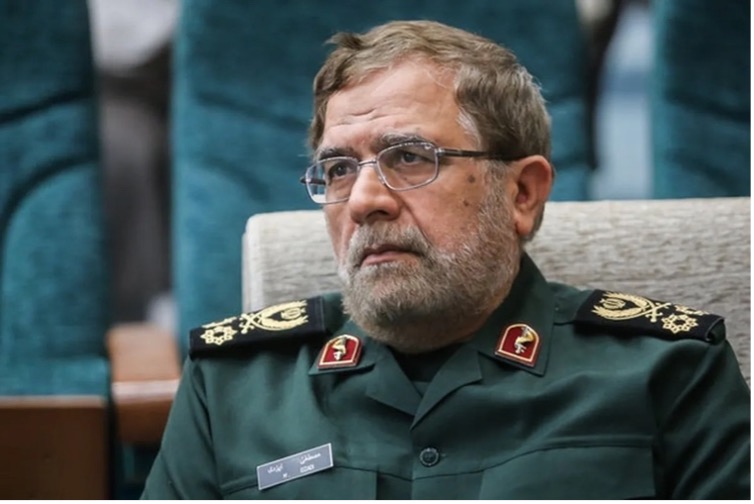
IRGC Deputy Commander-in-Chief Mostafa Izadi
Mojtaba Khamenei also named Mostafa Izadi as Vahidi’s second-in-command at the IRGC. Like Rezaee, Izadi is a member of the organization’s old guard. Izadi rose through the ranks of the IRGC’s Ground Forces, serving as deputy commander and then commander. He later became deputy for planning and strategic affairs at the General Staff of Iran’s Armed Forces and commander of the Cyber and New Threats Headquarters of the Khatam al-Anbiya Central Headquarters (KCHQ). Izadi holds the rank of major general, unlike his predecessors as IRGC deputy commander-in-chief, who were brigadier generals.
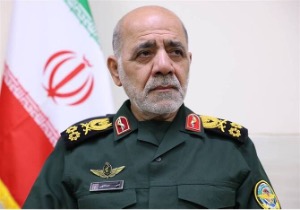
Chief of Staff of Iran’s Armed Forces Ali Abdollahi
Separately, Mojtaba named Ali Abdollahi as chief of staff of Iran’s Armed Forces. Abdollahi has served in various posts, including deputy commander of the IRGC Air Force; deputy commander of Iran’s Police Command; a deputy on the General Staff of Iran’s Armed Forces; deputy interior minister; a provincial governor; and, most recently, commander of the KCHQ, Iran’s wartime operational command. Abdollahi is a longtime associate of Speaker Ghalibaf, having been the latter’s deputy in the IRGC Air Force and the Police Command. Abdollahi’s new role automatically includes membership in the SNSC. This may bolster Ghalibaf’s position, given that Abdollahi has risen through the ranks as part of the speaker’s network.
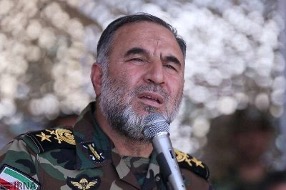
Deputy Chief of Staff of Iran’s Armed Forces Kioumars Heydari
With Abdollahi having been a career IRGC officer, the supreme leader named Kioumars Heydari as deputy chief of staff of Iran’s Armed Forces to balance out representation of Iran’s militaries. Heydari, whom the U.S. sanctioned for human rights abuses, is a career Iranian Army officer and spent most of his service in the Army’s Ground Force, including as its deputy commander and then commander. He later became Abdollahi’s deputy commander of the KCHQ. Heydari’s American sanctions designation is remarkable because it reflects the Iranian regular army’s involvement in human rights abuses, whereas traditionally the IRGC has been most publicly identified with domestic repression.
Significantly, the new appointments also aim to consolidate the General Staff of Iran’s Armed Forces with the KCHQ. This merger reverses the reorganization both bodies underwent in 2016, which established a permanent standing KCHQ separate from the General Staff.
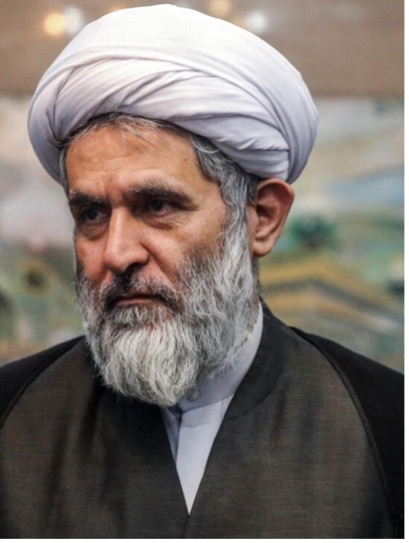
Basij Commander Hossein Taeb
Additional appointments by the supreme leader included, notably, Hossein Taeb as commander of the IRGC’s Basij for the second time. Taeb has long been a fixture in Mojtaba Khamenei’s inner network as a longtime confidante and a member of Mojtaba’s Habib Circle, a group of military and security elites tied to the new supreme leader.
Taeb started his career as head of counterintelligence in the Intelligence Ministry. He was pushed out of this position by then-President Ali Akbar Hashemi Rafsanjani, but Ali Khamenei soon named him deputy coordinator in the Office of the Supreme Leader. Taeb started his first stint atop the Basij in 2008, leaving in 2009 after structural reforms following the crackdown on the Green Movement over the disputed reelection of Mahmoud Ahmadinejad.
Taeb immediately moved from his post atop the Basij to commanding the IRGC’s Intelligence Organization, but was ousted in 2022 following a series of botched extraterritorial terror operations. He then was named as an advisor to the Guards’ commander-in-chief. Taeb was likely the victim of an internal power struggle. For years, Taeb feuded with Ali Asghar Mir Hejazi, the influential deputy chief of staff and intelligence advisor to Ali Khamenei when the latter was supreme leader. At one point, Taeb allegedly tapped Hejazi’s phone. Hejazi reportedly opposed Mojtaba Khamenei’s ascension to the supreme leadership, cautioning against excessive IRGC influence. Taeb’s reemergence at the helm of the Basij thus reflects Mojtaba’s desire to solidify his control over the state—especially at the expense of figures, like Hejazi, who opposed his candidacy for the top job. Taeb’s appointment also likely indicates that, given deteriorating economic conditions, Mojtaba wants a loyal henchman in a role critical for suppressing future protests.
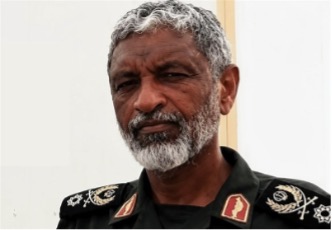
IRGC Navy Commander Ali Azmaei
The new supreme leader also named Ali Azmaei commander of the IRGC Navy, following the killing of Alireza Tangsiri during Operation Epic Fury. Azmaei, also under U.S. sanctions, previously served as deputy commander of the IRGC Navy and as commander of that force’s Fifth District. Azmaei will preside over a bureaucracy that oversees the harassment and sabotage of commercial vessels in international waters—a responsibility critical to the Iranian system, with Tehran seeking to leverage the Strait of Hormuz to deter enemy military operations targeting Iranian soil.
Ultimately, these appointments constitute the recycling of power among survivors of U.S. and Israeli military operations targeting the Iranian military and security establishment. All these men rose through the ranks under Ali Khamenei’s supreme leadership and were trusted by him, and their elevations do not indicate a significant ideological shift in approach by Mojtaba. Instead of promoting younger commanders, the new supreme leader chose to keep IRGC old guard figures in the top and second rungs of command.
Jason M. Brodsky is the policy director of United Against Nuclear Iran (UANI).
Receive Iran News in Your Inbox.
Eye on Iran is a news summary from United Against Nuclear Iran (UANI), a section 501(c)(3) organization. Eye on Iran is available to subscribers on a daily basis or weekly basis.