Organizational Chart of the Islamic Republic of Iran
Supreme National Security Council (SNSC)
The SNSC is tasked with debating and forming consensus on critical national security issues confronting the Iranian system. According to Article 176 of the Iranian constitution, the duties of the SNSC are threefold: determining the defense and national security policies within the framework of general policies stipulated by the supreme leader; alignment of domestic and national security policies; and ensuring the country maintains the requisite resources to defend against internal and external threats. The president serves as its chairman, and standing members include the ministers of foreign affairs, intelligence, and interior, the speaker of parliament, the chief justice, the chief of staff of Iran’s Armed Forces, the commanders-in-chief of Iran’s Army and the Islamic Revolutionary Guard Corps (IRGC), and two representatives of Iran’s supreme leader, one of whom usually serves as the SNSC’s secretary, who is also technically named by the president.
The incumbent secretary is Mohammad-Bagher Zolghadr, who replaced Ali Larijani. Larijani was killed in an Israeli strike during Operation Epic Fury after overseeing the SNSC's campaign to repress Iranian protesters where upwards of 30,000 people were killed in January 2026. Other Iranian officials may participate in SNSC deliberations, depending on the topic. In a 2007 interview, Ali Larijani, a onetime secretary of the SNSC himself who later served as speaker of parliament, revealed the SNSC spends about 20% of its time on nuclear issues. The decisions of the SNSC are required to be approved by the supreme leader, and once he does, they become final. Under the Khatami and the Ahmadinejad presidencies, the SNSC secretary doubled as the chief nuclear negotiator for the Islamic Republic. But that structure changed during the Rouhani and Raisi presidencies, when the nuclear negotiating file was transferred to the Foreign Ministry. However, the SNSC still debates and forms consensus on nuclear policy, and after the supreme leader approves, these become binding on the Foreign Ministry to implement. The SNSC also has sub-councils, such as the National Domestic Security Council (NDSC), which is chaired by the interior minister, who is a standing member of the SNSC.
In 2025, following the 12-Day War between Israel and Iran, the Iranian leadership formed the National Defense Council, which existed in a form during the Iran-Iraq War. It is meant to centralize and streamline decision-making during wartime. The National Defense Council is composed of the heads of the three branches of government--with the president as chairman--along with military commanders, including the commander of the Khatam Al-Anbiya Central Headquarters, which oversees military operations in wartime. Two additional representatives of the supreme leader are part of the National Defense Council.
Secretaries of the Supreme National Security Council:
-
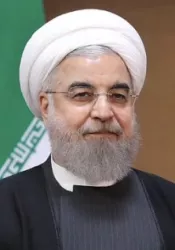 Hassan Rouhani1989-2005
 -
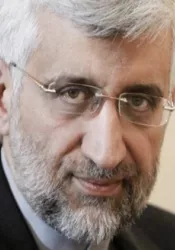 Saeed Jalili2007-2013
 -
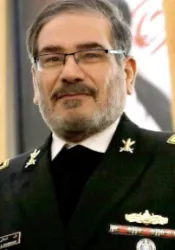 Ali Shamkhani2013-2023
 -
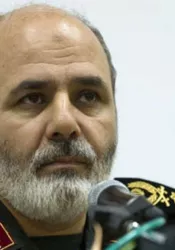 Ali Akbar Ahmadian2023-2025
 -
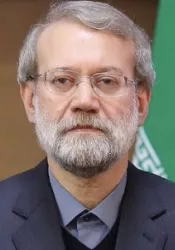 Ali Larijani2005-2007, 2025-2026
 -
 Mohammad-Bagher Zolghadr2026-present