Takeaways from the Funeral of Ali Khamenei
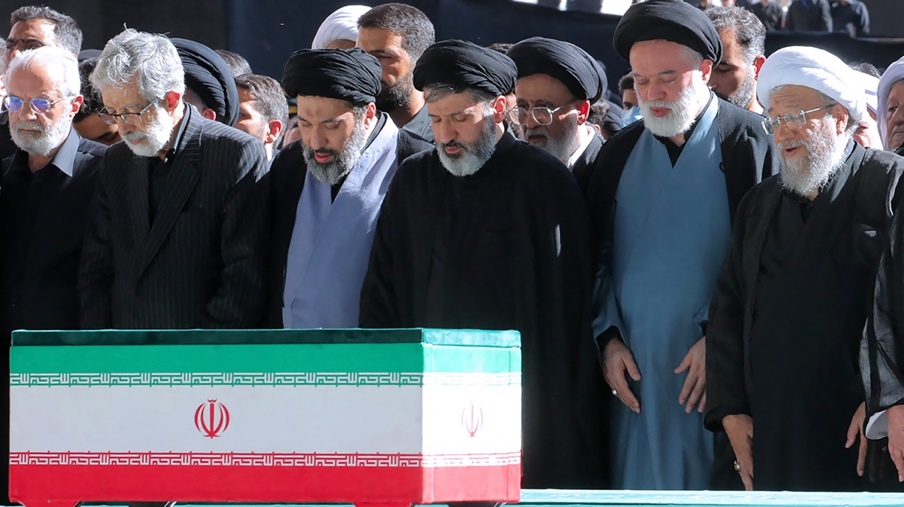
On July 4, the Iranian regime began its state funeral for the late Supreme Leader Ayatollah Ali Khamenei. With its invitation to Western media and sympathetic influencers to cover, the Islamic Republic traded access for promotion of the narrative that it sought to project to the world: that the Islamic Republic has survived, is indomitable, has significant support inside Iran, and is not going anywhere.
Western press reports quickly adopted this framing—citing the large numbers of people in attendance as well as their anti-American chants as evidence that Operation Epic Fury had failed. In doing so, they become unwitting vehicles of the Islamic Republic’s propaganda machine.
But regime change in Iran was never an explicit American goal of the operation. Degrading Iran’s ability to project power beyond its borders was the goal, with creating eventual conditions for regime change down the line as a bonus. As President Trump stated on February 28, his authorization of military action against the Iranian regime was not based on the assumption there would be a rapid mass uprising as the bombs were dropping on Islamic Republic repressive institutions. He counseled Iranians not to leave their homes until the U.S. finished its work.
The Islamic Republic has historically engineered pro-regime crowds to create the impression it has widespread backing. This has taken place at state funerals for slain Islamic Republic officials, Quds Day marches, and the anniversary of the Islamic Revolution. However, in some cases, months later, mass uprisings against the regime have erupted. This calls into question any suggestions this week of a true “rally 'round the flag” effect.
During Khamenei’s funeral, Iranian officials were visibly more comfortable appearing in public. They appeared aboveground and in groups, with several officials, including the commander-in-chief of the Islamic Revolutionary Guard Corps (IRGC) Ahmad Vahidi reappearing in public for the first time since February. This displays a level of confidence that there is no near-term plan to kill these commanders, as officers like Vahidi remain high on the list should military action resume given his history in spearheading terror plots around the world and being subject to an INTERPOL Red Notice.
Yet these Islamic Republic officials are still taking a risk in reemerging from the shadows. It was the late Supreme National Security Council Secretary (SNSC) Ali Larijani who was eliminated during Operation Epic Fury after he marched confidently during a Quds Day rally in Tehran in March.
Even former President Mahmoud Ahmadinejad, who was allegedly wounded after strikes around his residence during Operation Epic Fury, participated to create the perception of a unification among the ranks of former and current Islamic Republic officials after questionable reporting later emerged about his potential recruitment by foreign intelligence agencies to spearhead a successor government. Nevertheless, increasing public jousting among Iranian officials has emerged in the ceasefire period over the Memorandum of Understanding.
The Khamenei family has been more cautious in their public appearances than others. Supreme Leader Mojtaba Khamenei has made no public appearance at his father’s funeral to date. This is unusual as during the funeral of the first Supreme Leader of the Islamic Republic Ruhollah Khomeini in 1989, his son Ahmad Khomeini as well as Khomeini’s successor Ali Khamenei played leading roles in the service.
Only three of Ali Khamenei’s four sons made a public appearance in Tehran—Mostafa, Masoud, and Meysam. Additionally, in-laws of Ali Khamenei, namely Mojtaba Khamenei’s father-in-law Gholam Ali Haddad-Adel, a former speaker of parliament, played a prominent role. Haddad-Adel’s daughter Zahra, who was married to Mojtaba Khamenei, was killed in the first airstrikes of Operation Epic Fury on February 28. Khamenei’s son-in-law who is the son of Mohammad Mohammadi Golpayegani, a former Office of the Supreme Leader chief of staff, also made a public appearance, as did Khamenei’s wife’s brother Hassan Khojasteh. Haddad-Adel and Khojasteh have been the most publicly visible of Khamenei’s extended family since February.
L to R: Ali Khamenei’s brother-in-law Hassan Khojasteh; Mojtaba Khamenei’s father-in-law Gholam Ali Haddad-Adel; and Ali Khamenei’s sons: Meysam, Masoud, and Mostafa
Despite the Islamic Republic’s robust efforts to shape the narrative surrounding Khamenei’s funeral, the lackluster attendance from foreign delegations was telling. Only few heads of state and government, like Pakistan’s prime minister and Iraq’s president, journeyed to Iran for the funeral, which is noteworthy given the longevity—37 years—and significant nature of Ali Khamenei’s tenure as supreme leader. Other regional countries like Saudi Arabia, Qatar, and Oman, sent lower-level officials. The UAE notably did not appear to have a visible senior representative there despite it sending a foreign minister-level delegation during previous state funerals—for example for the late Iranian regime President Ebrahim Raisi in 2024—which is a signal of a chill in relations after the Iranian regime heavily rocketed and droned the UAE during Operation Epic Fury.
Russia dispatched the deputy chairman of its Security Council Dmitry Medvedev and China sent He Wei, the vice chairperson of the Standing Committee of the National People’s Congress. Apart from these states, leaders of the Iranian regime’s terror militias from around the region took part, including former Hezbollah cabinet minister in Lebanon Mohammed Fneish, the head of the political bureau of Hamas Mohammad Darwish, the secretary-general of Palestinian Islamic Jihad Ziyad al-Nakhalah, and a member of the political bureau of the Houthis Dhaif Allah al-Shami.
This attendance—mostly the B and C lists among world leaders—underscores the isolation of the Islamic Republic, despite its attempts to project strength after Operation Epic Fury and its claims of sovereignty over the Strait of Hormuz.
In terms of messaging, the loud calls for revenge at the funeral—with pro regime orators and officials all repeating like a chorus that there will be retribution for Khamenei’s death irrespective of negotiations—underscore that the Memorandum of Understanding that is in place isn’t a “peace deal” as the Islamic Republic’s anti-American enmity is not up for negotiation. It’s merely a tactical pause until hostilities begin again.
Jason M. Brodsky is the policy director of United Against Nuclear Iran (UANI).
Receive Iran News in Your Inbox.
Eye on Iran is a news summary from United Against Nuclear Iran (UANI), a section 501(c)(3) organization. Eye on Iran is available to subscribers on a daily basis or weekly basis.